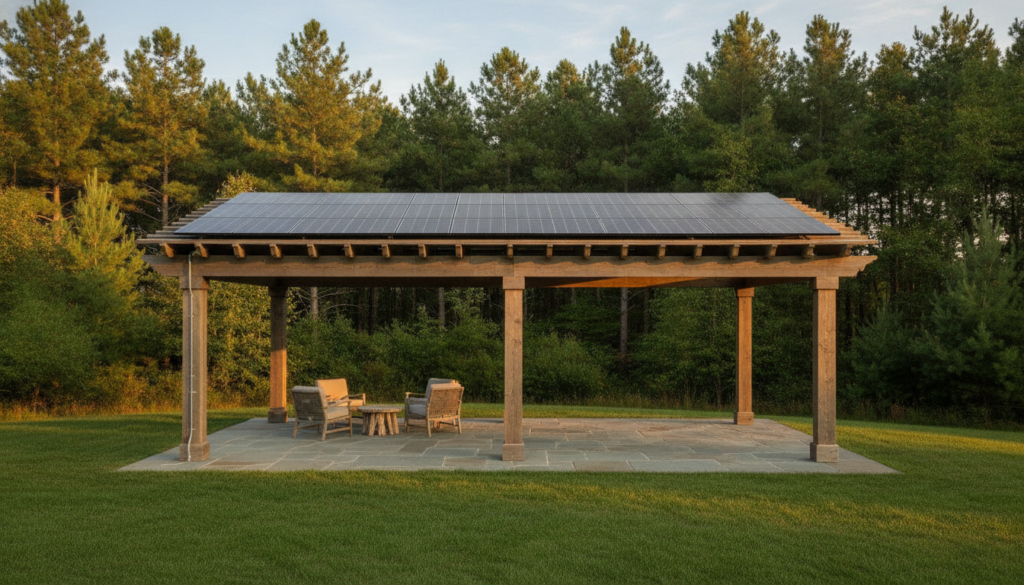
A pergola with solar panels turns an ordinary shade structure into a small power station for your backyard. Instead of choosing between shade and solar, homeowners across Central Florida now get both in one build. It’s a smart upgrade for anyone tired of scorching patios or rising electric bills, and it doesn’t require sacrificing yard space for a separate solar array.
This guide walks through how these hybrid structures work, what they cost, and how they compare to standard pergolas, carports, and covered porches. We’ll cover materials like aluminum and metal, motorized louver options, and the financing paths — including rent-to-own — that make solar pergolas accessible in 2026. By the end, you’ll know exactly what questions to ask a pergola contractor before signing a contract.
📌 Key Takeaways
- A pergola with solar panels can offset a portion of your home’s daytime energy use while shading your patio or carport.
- Aluminum and metal pergola frames handle Florida heat, humidity, and wind better than untreated wood.
- Motorized louvered roofs let you angle panels for better sun exposure or close them entirely during storms.
- Rent-to-own and financing plans are available, so upfront cost doesn’t have to be a dealbreaker.
- Always confirm local permitting — Marion County and similar jurisdictions have specific rules for attached structures.
Jump to a section:
- How a Solar Pergola Actually Works
- Choosing Materials: Aluminum vs Metal vs Wood
- Solar Pergola vs Pergola Carport vs Covered Porch
- What Building a Pergola With Solar Panels Costs
- Financing and Rent-to-Own Options
- Frequently Asked Questions
How a Solar Pergola Actually Works
Quick Answer: A solar pergola replaces standard roof slats with photovoltaic (PV) panels — the same technology used in rooftop solar — wired to an inverter that feeds power to your home or a battery. The pergola still shades your patio; it just does double duty generating electricity.
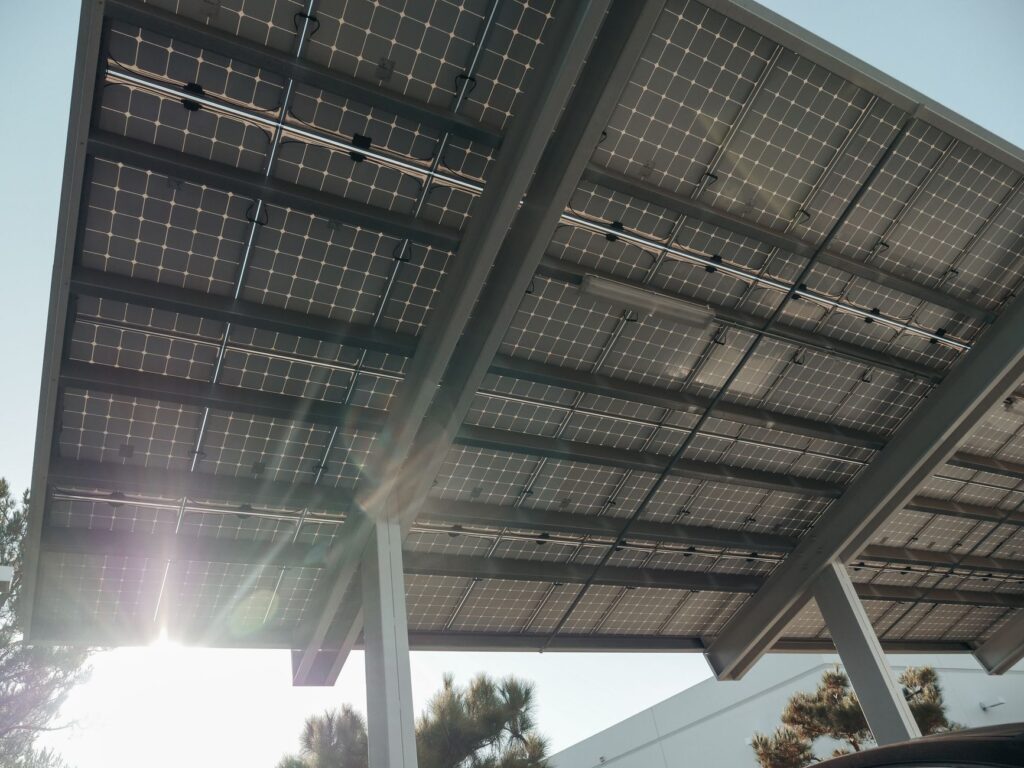
Most residential setups use monocrystalline panels mounted flush to the pergola frame or built into a motorized louver system. The louvers tilt to track the sun for maximum output, then close flat when you want denser shade or rain protection. According to the U.S. Department of Energy’s Solar Energy Technologies Office, panel efficiency and micro-inverter technology have improved enough that smaller residential arrays — like the 8-12 panels typical on a backyard pergola — can meaningfully offset daytime AC or pool pump loads.
Electrical Hookup Basics
A licensed electrician ties the pergola’s inverter into your home’s main panel, often through a dedicated circuit. This isn’t a DIY wiring job — it involves code-compliant grounding and, in many counties, an inspection before final sign-off.
⚠️ Common Mistake: Homeowners sometimes buy a pre-fab solar pergola kit online without confirming local electrical permitting requirements. Skipping inspection can void manufacturer warranties and create real fire risk.
Choosing Materials: Aluminum vs Metal vs Wood
Quick Answer: Aluminum pergola frames are the top pick for solar installations because they’re lightweight, rust-resistant, and rated to carry panel weight without sagging. Steel (metal) frames offer more strength for larger spans but need protective coating in humid climates.
Wood pergolas look classic but require more upkeep and aren’t always rated for the added dead-load of PV panels plus wind uplift. In Florida’s humidity, untreated wood can warp within a few seasons, which stresses panel mounting brackets over time.
Why Aluminum Wins for Most Backyards
An aluminum pergola resists corrosion near coastal counties like Saint Johns and Flagler, and it’s easier to retrofit with solar rails than dimensional lumber. It’s also lighter, which matters if you’re mounting on an existing deck or attaching to a carport structure rather than pouring new footers.
💡 Expert Insight: We tell customers building a pergola for backyard solar use to start with the structural frame decision first, then pick a panel size that fits standard rafter spacing. Retrofitting panels onto an undersized frame almost always costs more than building it right the first time.
Solar Pergola vs Pergola Carport vs Covered Porch
Quick Answer: A solar pergola works well over an open patio, a pergola carport doubles as vehicle shade plus power generation, and a covered porch pairs solar with a fully roofed living space. Each fits a different yard layout and budget.
| Structure Type | Best For | Solar Panel Fit | Typical Frame |
|---|---|---|---|
| Backyard pergola | Open patio shade, entertaining space | Excellent — flat or louvered mount | Aluminum or metal |
| Pergola carport | Vehicle + equipment shade with power offset | Good — larger flat roof area | Metal, boxed-eave |
| Covered porch | Attached living space, weather protection | Moderate — needs south-facing slope | Wood or metal hybrid |
Matching the Structure to Your Property
If you already park an RV or boat under a carport, converting it to a pergola carport with solar panels can turn dead roof space into usable power generation. Homeowners in Gainesville and Lakeland often choose this route because carports already have the open, unshaded roofline solar needs.
📊 Data Point: The Solar Energy Industries Association reports that residential solar installations have grown steadily nationwide as panel costs continue to drop, making smaller structure-integrated arrays more financially practical than a decade ago.
What Building a Pergola With Solar Panels Costs
Quick Answer: Expect a wider price range than a standard pergola, since panels, inverters, and licensed electrical work add to the base structure cost. A basic aluminum pergola might run a few thousand dollars, while a full solar-integrated build can climb several times higher depending on panel count.
Costs swing based on square footage, whether you choose a fixed roof or motorized louvers, panel wattage, and whether the structure ties into an existing electrical panel or needs upgraded service. A pergola contractor should walk you through a line-item quote rather than a single lump number.
Factors That Move the Price Up or Down
- Frame material — aluminum and metal typically cost more than basic wood but need less long-term maintenance.
- Motorization — motorized louvered roofs add cost but improve panel angle and rain protection.
- Electrical scope — running new circuits or adding a battery backup increases labor hours.
- Permitting — jurisdictions like Marion County require permits for attached structures, and fees vary; see our Marion County shed permit resource for a sense of the local permitting process.
- Site prep — sloped yards or existing concrete pads change footer and mounting costs.
✅ Quick Tip: Ask your installer for a cost breakdown separating the structure, the panels, and the electrical work. It makes comparing quotes from different pergola manufacturers far easier.
Financing and Rent-to-Own Options
Quick Answer: Solar pergolas don’t have to be paid for upfront. Rent-to-own programs and standard financing plans let homeowners spread the cost over time while still enjoying the shade and energy savings right away.
We’ve found that rent-to-own works especially well for families who want a backyard pergola now but prefer predictable monthly payments over a large one-time expense. Financing options can also apply to accessory structures beyond pergolas, including custom carports and other custom builds for properties that need more than a simple shade structure.
What to Ask Before Signing
Confirm whether the payment plan covers the solar components or just the structural frame — some financing programs treat electrical equipment separately. Also verify who handles warranty claims if the panels or inverter need service down the line.
⚠️ Common Mistake: Some homeowners assume rent-to-own always includes electrical installation. Always get the full scope of work in writing before committing.

Pergola Ideas Worth Considering Beyond Solar
Quick Answer: Not every backyard needs a full solar setup right away — some homeowners start with a standard aluminum or metal pergola and add panels later as a phase-two project.
A covered porch pergola pairs well with outdoor kitchens, while a simpler open-lattice design suits homeowners who mainly want dappled shade over a garden seating area. If you’re still deciding, browsing our metal buildings lineup can help you compare frame styles before committing to solar add-ons.
Planning for a Future Solar Retrofit
Even if solar isn’t in this year’s budget, ask your contractor to size the frame and footers for the added weight now. This keeps a future retrofit simpler and avoids rebuilding the structure later.
💡 Expert Insight: In our experience serving Ocala, Tampa, and Orlando-area customers, the homeowners happiest with their solar pergola are the ones who planned the electrical rough-in during initial construction, even if panels went on a year later.
Frequently Asked Questions
Can you add solar panels to an existing pergola?
Yes, in many cases an existing aluminum or metal pergola frame can be retrofitted with solar panels if it was built with adequate structural rating. A licensed contractor should inspect the frame first to confirm it can handle the added weight and wind load.
How much does a pergola with solar panels cost?
Costs vary widely based on size, panel count, frame material, and electrical scope, generally ranging from a few thousand dollars for a basic build to significantly more for a fully motorized, battery-backed system. Getting a detailed, itemized quote from a local pergola contractor is the best way to know your real number.
Do I need a permit to build a pergola with solar panels in Florida?
Most Florida counties, including Marion County, require permits for attached structures and separate electrical permits for solar tie-ins. Check with your local building department or a resource like our Marion County permit guide before starting construction.
What’s the difference between a pergola and a pavilion for solar use?
A pergola typically has an open or louvered roof designed for partial shade, while a pavilion has a solid, fully enclosed roof. Pavilions can also support solar panels, but pergolas with louvered roofs offer more flexibility to adjust sun exposure throughout the day.
Is a motorized pergola worth the extra cost for solar panels?
A motorized pergola lets you angle louvers for better panel efficiency and close them quickly before storms, which can extend the life of both the structure and the electrical components. For homeowners in high-sun areas like Tampa or Orlando, the added control often pays off in both comfort and energy output.
Where can I find pergola installers near me in Central Florida?
Homeowners in Ocala, Gainesville, Jacksonville, Daytona Beach, and Saint Augustine can reach out to a local contractor experienced with both standard and solar-integrated builds. Ask specifically about solar pergola experience, since not every pergola installer handles the electrical scope in-house.
Can a pergola carport support solar panels for an RV or boat?
Yes, a pergola carport’s open roofline is often ideal for solar panels since there’s usually no overhead obstruction. The added shade also protects vehicles and equipment while the panels generate power.
Bringing Shade and Power Together
A pergola with solar panels gives Florida homeowners a practical way to combine outdoor living space with real energy savings. Whether you’re drawn to an aluminum frame, a motorized louvered roof, or a simple pergola carport retrofit, the right contractor will match the structure to your yard, budget, and electrical needs. As of 2026, financing and rent-to-own options make this upgrade more attainable than most homeowners expect, even with the added solar components.
Next steps:
- Walk your yard and decide between a backyard pergola, pergola carport, or covered porch layout.
- Request an itemized quote covering frame, panels, and electrical work separately.
- Confirm permitting requirements for your county before scheduling installation.
- Ask about rent-to-own or financing plans if upfront cost is a concern.
Ready to explore your options? Contact Sandalwood Sheds today to talk through pergola, carport, and custom build designs suited to your Florida backyard.