You picked the building. Now you want delivery day to go off without a hitch, with your shed set level, the doors swinging true, and nothing scraped on the way in. Good news: getting your yard ready is straightforward, and you do not need a contractor for most of it. This guide walks you through the three things that matter, in plain language, so your delivery near Belleview or Ocala is the easy part.
Here is the honest truth: most delivery-day problems are not about the building. They are about the ground and the path. A spot that looks flat to the eye can have a four-inch fall across sixteen feet. A gate that fit the lawn mower will not fit a ten-foot-wide barn. And a building set straight on bare Florida dirt traps moisture under the floor, which is the number one cause of floor rot down here.
None of that is hard to avoid, but it is easy to miss when nobody tells you what to look for. You have probably been burned before by a company that took your money and left you to figure out the rest. That is not how we do it. We would rather spend ten minutes now showing you exactly what to check than watch a driver turn around because a fence post is six inches too close. A few simple steps protect your building, your yard, and your delivery date.
Start by choosing a spot that is flat, a touch higher than the ground around it, and easy to get to. A slightly raised spot lets Florida rain drain away instead of pooling under your building. Avoid the low corner of the yard where water sits after a summer storm.
Here is how to level the ground for a shed:
You do not have to make it perfect. Our crew sets the building on the solid concrete cap blocks you provide and shims it level as it is set, so small imperfections are handled on delivery day. What matters is that the ground is close, firm, and not sloping off to one side. If the fall across your spot is more than a few inches, tell us when you order so we plan the set correctly. Want us to look at it first? Read the full Site Prep guide or ask us on the phone.
Your shed should never sit straight on bare ground. Our Stor-Mor buildings are built on pressure-treated 4×6 skids so they can rest on a base that keeps the wood up off the dirt. In Florida, that air gap matters more than almost anything: it lets humidity escape instead of getting trapped under the floor, and it keeps termites and standing water away from the wood. Every building sits on solid concrete cap blocks you provide. Under the blocks, a gravel pad or concrete slab is optional, and whether you need one depends on your ground and your budget.
Solid concrete cap blocks (required). This is what every delivered shed sits on, and it is a strong fit for Florida yards. The blocks go under the skids. They lift the building four to eight inches off the ground, create that humidity-clearing air gap, and let our crew level the shed precisely even on a lawn that is not perfectly flat. The number of blocks depends on the building’s size, and we tell you exactly how many when you order. No pour, no cure time, ready the day we deliver.
Gravel pad (optional, under the blocks). The best base if you want a clean, permanent footprint that drains well. Build it from compacted 3/4-inch crushed stone, four to six inches deep, in a frame 12 inches wider than the shed on every side. Crushed stone locks together and stays put; loose pea gravel shifts, so skip it. Let a fresh pad settle a day or two before delivery.
Concrete slab (optional, under the blocks). The strongest, longest-lasting base, and the right call for a big garage, heavy equipment, or a workshop floor. A slab costs more and needs a pro to pour it with a slight slope for drainage. For most backyard sheds, cap blocks on firm, reasonably level ground are plenty.
Not sure which fits your yard? Tell us what you are storing and where, and we will point you to the base that does the job without overspending.
A building can only go where the truck can take it. Before delivery day, walk the route from the road to your spot and check the tight points. Our driver brings the building in on a trailer, and for backyard sets we use a Shed Mule, a remote-controlled dolly that slides under the shed and carries it through gates and around the house.
Measure these clearances:
If a gate is too narrow, many fence panels lift out in a few minutes. If you are tight on space, send us photos and measurements when you order. We would rather solve it on paper than have a truck show up to a spot it cannot reach. See how the set works on our Delivery & Installation page.
Once your yard is ready, the set itself is quick and you do not have to lift a thing.
That is it. Most in-stock buildings arrive in about a week from order, and you go from bare ground to a finished, level building in a single visit.
This is worth checking before delivery, not after. Permit, zoning, and setback rules come from your county or city, setback distances vary by zoning class, and the rules can change, so do not rely on what you read on a shed website, including ours. City limits and HOA rules differ again. Confirm your own address with Marion County Building Safety at 352-438-2400, or with your city’s building department if you are inside the Ocala, Belleview, or Dunnellon city limits. We walk through the details on our permit guide: Shed Permits in Marion County: What to Check Before You Order
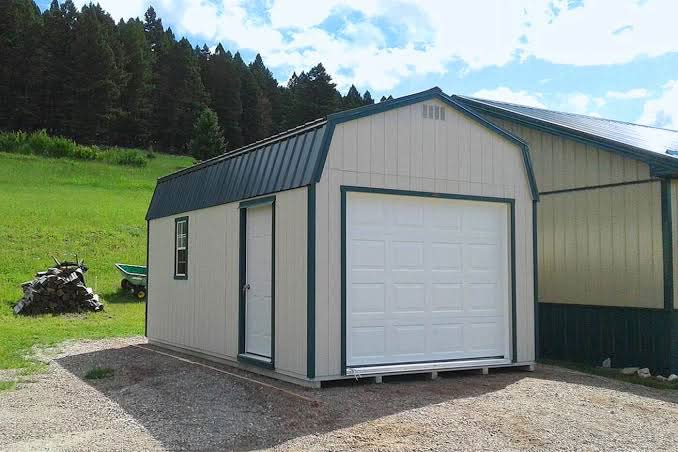
Do three things before the truck arrives: clear and level the spot, have your solid concrete cap blocks on site so the shed sits up off the ground (we tell you how many when you order), and open a clear path so the driver can reach the pad. Pick a flat, slightly raised area that drains well, and measure your gate and path so you know the building fits through. Most yards need an afternoon of work or less.
Every shed sits on solid concrete cap blocks you provide. The number of blocks depends on the building’s size, and we tell you exactly how many when you order. The blocks lift the building four to eight inches off the ground, which clears Florida humidity and helps keep termites and rot away. Under the blocks, a gravel pad of 3/4-inch crushed stone, four to six inches deep, gives a clean, well-draining footprint. A concrete slab is the strongest base and is best for garages or heavy equipment.
No. Get it within about an inch of level across the footprint and our crew handles the rest with shims when the building is set on your cap blocks. What matters most is that the ground is firm and not sloping hard to one side. If the fall across your spot is more than a few inches, let us know when you order so we plan the set.
Plan on a gate opening of at least 12 feet for a 10-foot-wide shed and 14 feet for a 12-foot-wide shed, plus about 24 inches more for the Shed Mule dolly. The path to the pad should be 16 to 18 feet wide and 14 feet tall, clear of branches, wires, and soft ground. If a gate is too narrow, lifting out a fence panel usually solves it.
In-stock buildings near Belleview and Ocala are typically delivered in about a week, roughly 7 to 10 days. Custom orders take longer to build. The set itself usually takes under an hour once the driver reaches your pad, and we level it and walk it with you before we leave.
Check before delivery day. Your county or city decides whether your building needs a permit and where it can sit, based on your zoning and the building itself. Those rules can change, and city limits and HOAs differ again, so confirm your own address with Marion County Building Safety at 352-438-2400 before delivery. Our permit guide covers the details.
That is what a little prep buys you, and we will help you get there. Tell us what you are using the building for and where it is going, and we will size it right, point you to the base that fits your yard, and handle delivery and setup from there. If a smaller building does the job, we will tell you. No pressure, no hidden delivery fees, only a straight answer.