Modern pergolas have moved way past the flat wooden lattice your neighbor built in the ’90s — today’s versions use aluminum framing, motorized louvers, and integrated lighting to turn a bare patio into real living space. If you’ve searched "pergolas near me" and felt overwhelmed by options, the short answer is this: a modern pergola gives you adjustable shade, storm-rated materials, and a design that actually matches your house, without the maintenance headaches of a traditional wood build. That’s especially true across Central Florida, where sun and sudden downpours both need managing on the same afternoon.
At Sandalwood Sheds, we build custom outdoor structures for families from Ocala to Orlando, and pergolas are consistently one of the most requested upgrades. This guide breaks down what makes a pergola "modern," how louvered roofs work, what they cost, and how to choose a builder you can trust.
📌 Key Takeaways
- Modern pergolas use aluminum or engineered wood, not just raw lumber, for better storm and rot resistance.
- Louvered pergolas let you rotate the roof panels to control sun and rain without leaving your seat.
- Rent-to-own and financing options make a custom pergola accessible without a big upfront payment.
- Attached pergolas typically cost less than freestanding ones because they share a wall structure.
- Florida’s heat and storms make material choice — not just style — the most important early decision.
Jump to a section:
- What Makes a Pergola "Modern"?
- Modern vs. Traditional Pergolas
- Pergolas With Louvers Explained
- Best Materials for Florida Weather
- Costs and Financing Options
- Finding Pergolas Near Me
- Installation Timeline and Permits
- FAQ
What Makes a Pergola "Modern"?
Quick Answer: A modern pergola swaps traditional open lattice for clean lines, weather-resistant materials, and often an adjustable or louvered roof, giving you real shade control instead of just decoration.
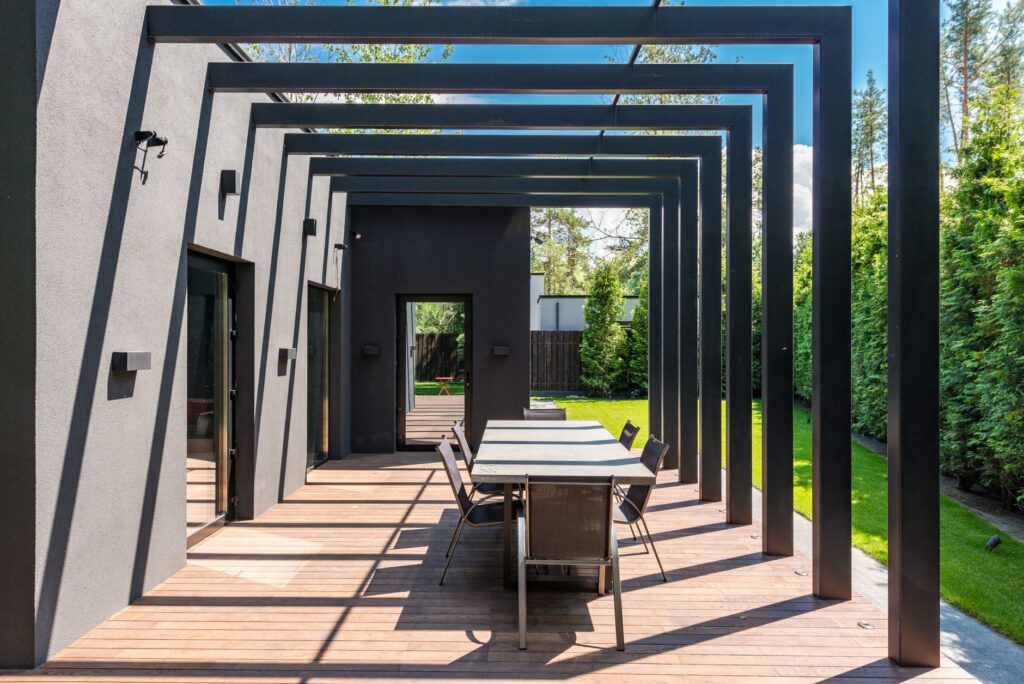
Traditional pergolas were mostly decorative — open beams that cast dappled shade but did little in a downpour. Modern pergolas function more like an outdoor room, with solid or louvered roof panels, built-in gutters, and sometimes lighting or fans wired right into the frame.
Design Features Homeowners Ask For Most
Most of our Central Florida clients want three things: shade that actually blocks midday sun, a roofline that complements the house, and low upkeep. Aluminum framing checks all three boxes, since it won’t warp in humidity the way untreated wood does.
We also see growing demand for pergolas built as an extension of a custom outdoor structure, attached directly to a shed, cabin, or finished smart space rather than standing alone in the yard.
💡 Expert Insight: In our experience, clients who pair a pergola with an existing structure — like attaching it to a lofted barn’s porch — get more usable shade per dollar than a standalone build in the middle of the lawn.
Modern vs. Traditional Pergolas: Key Differences
Quick Answer: Traditional pergolas are open, wooden, and mostly decorative; modern pergolas add adjustable roofing, corrosion-resistant materials, and functional weather protection.
The biggest shift isn’t just looks — it’s function. A traditional cedar pergola needs re-staining every year or two in Florida’s UV and humidity. Modern aluminum or vinyl-clad versions hold their finish far longer with almost no maintenance.
Side-by-Side Comparison
| Feature | Traditional Wood Pergola | Modern Aluminum/Louvered Pergola |
|---|---|---|
| Maintenance | Annual staining/sealing | Occasional rinse-off |
| Rain protection | Little to none | Full coverage when louvers close |
| Lifespan in FL climate | 8-12 years | 20+ years with proper install |
| Style options | Limited | Wide range of finishes and colors |
| Typical cost | Lower upfront | Higher upfront, lower lifetime cost |
⚠️ Common Mistake: Homeowners often choose the cheapest wood kit without factoring in Florida humidity, then end up replacing rotted posts within five years.
This doesn’t mean wood is a bad choice everywhere — in drier climates it holds up fine. But in Marion, Orange, and Volusia counties, the combination of sun, humidity, and storm season shortens a wood pergola’s life considerably, according to general guidance from the National Weather Service on Florida’s subtropical climate patterns.
Pergolas With Louvers: The Adjustable-Roof Upgrade
Quick Answer: Louvered pergolas have rotating roof slats — manual or motorized — that open for airflow and sun or close flat to block rain, giving you one structure for both purposes.
A louver, in this context, is a horizontal slat that pivots on an axis. Pergolas with louvers let you dial in exactly how much sun and rain reach your patio, which is a big deal during Florida’s afternoon thunderstorm pattern.
How the Mechanism Works Day to Day
Most systems use a hand crank or a small motor connected to a remote. Close the louvers before a storm rolls in, and the roof sheds water like a solid one. Open them on a mild afternoon, and you get filtered light instead of full sun.
I’ve walked clients through this exact scenario in Ocala: a family wanted full sun in spring but full rain coverage by June, and a louvered pergola solved both without building two separate structures.
✅ Quick Tip: If you entertain outdoors often, pick motorized louvers over manual ones — closing a manual system fast enough before a sudden downpour is harder than it sounds.
Who Benefits Most From Louvered Roofs
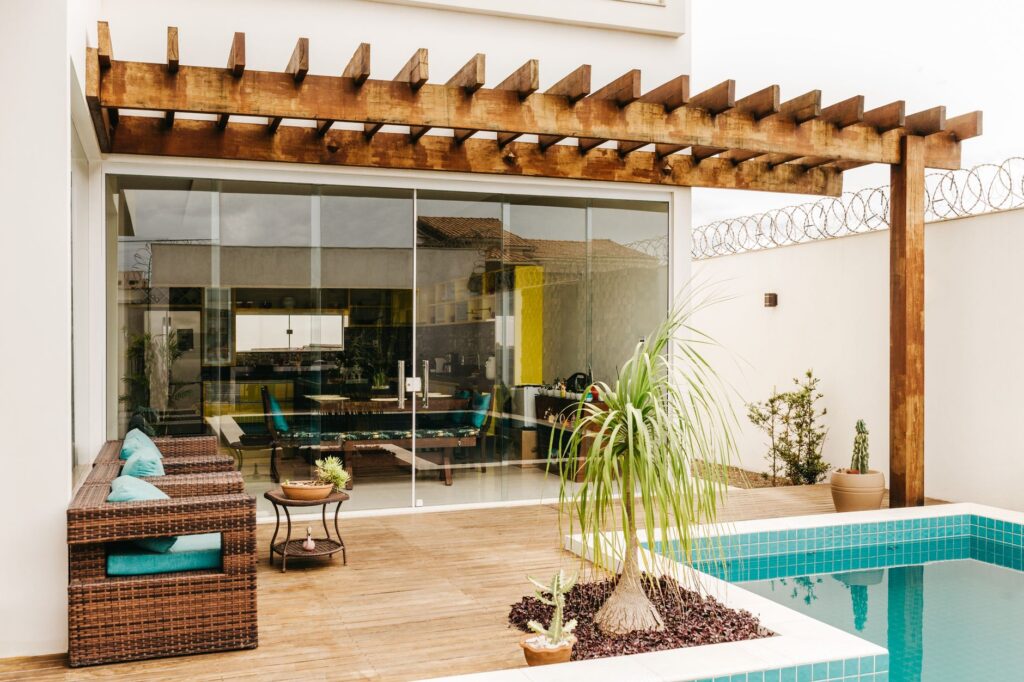
Louvered pergolas make the most sense for households that use the space year-round — outdoor kitchens, hot tubs, or a covered dining area. If your pergola is purely decorative shade over a small seating nook, a fixed roof may be the more cost-effective route.
Best Materials for Florida Weather
Quick Answer: Aluminum and engineered composite frames outperform raw wood in Florida’s humidity and storm exposure, while still allowing wood-look finishes for curb appeal.
Heat, humidity, and wind load are the three factors that matter most here. According to the U.S. Department of Energy, shade structures over patios and windows can meaningfully reduce cooling costs by blocking direct solar heat gain before it reaches the home — a real consideration when Florida AC bills climb every summer.
Frame Material Options
Aluminum resists rust when properly coated, doesn’t attract termites, and holds paint well. Pressure-treated pine costs less initially but needs sealing on a schedule. Steel framing, used on some of our metal building projects, offers strong wind resistance but should be checked for coastal salt exposure near areas like Daytona Beach or Saint Augustine.
📊 Data Point: Excessive UV exposure is also a documented health concern, not just a comfort issue — the CDC notes that shade is one of the simplest ways to reduce skin damage from prolonged sun exposure during outdoor activities.
Roofing Panel Choices
Polycarbonate panels let filtered light through while blocking UV and rain. Solid aluminum louvers block both completely when closed. Fabric or retractable canopy inserts are the lightest option but wear faster in high-wind counties.
Modern Pergola Costs and Financing Options
Quick Answer: Attached pergolas generally run less than freestanding ones, and louvered or motorized systems cost more than fixed roofs — but financing and rent-to-own plans keep monthly payments manageable.
Pricing depends heavily on size, material, and whether the roof is fixed or adjustable. A basic attached wood pergola sits at the lower end, while a large freestanding aluminum structure with motorized louvers sits at the top.
What Drives the Price Up or Down
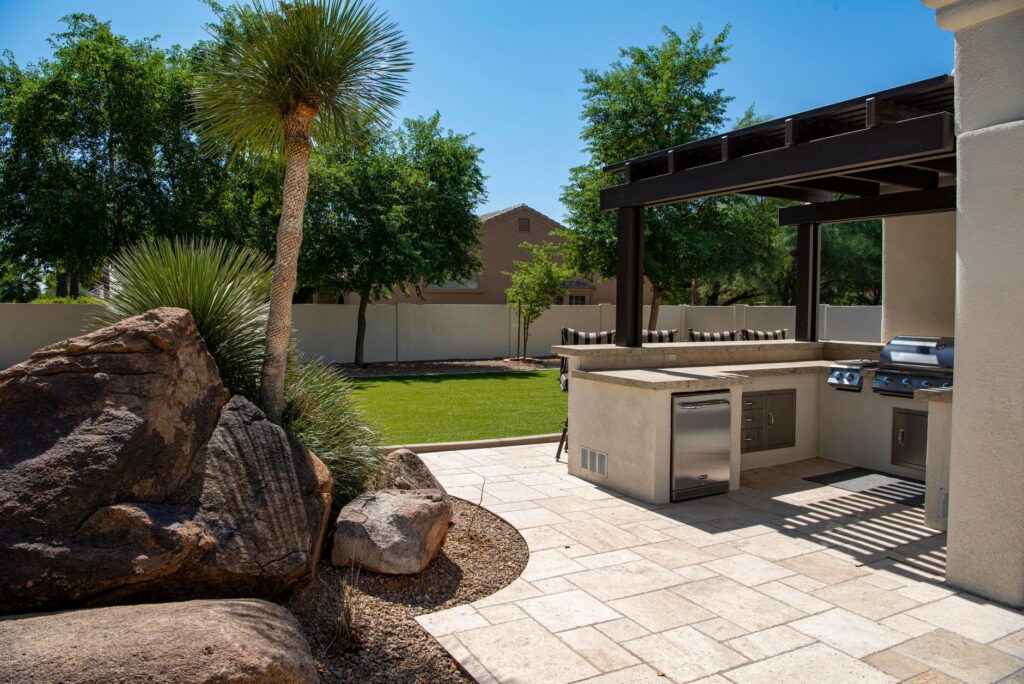
Square footage is the biggest factor, followed by material and roof mechanism. Adding electrical for lighting or fans, or building on a new concrete pad instead of an existing patio, both add to the total project cost.
✅ Quick Tip: Ask your builder for a written breakdown separating frame, roof system, and site prep costs — it makes comparing quotes far easier and flags hidden add-ons early.
We’re straightforward with clients about this: a beautiful pergola that stretches your budget too thin isn’t a win. That’s why we offer rent-to-own and financing arrangements, so a custom pergola project doesn’t have to wait for a lump-sum payment.
Financing and Rent-to-Own in Practice
Rent-to-own means you pay a set schedule and gain ownership over time, rather than qualifying for traditional financing upfront. It’s a route many of our customers across Marion and Lake counties choose, especially when pairing a pergola with a larger structure like a lofted barn or carport.
Finding Pergolas Near Me: What to Look for Locally
Quick Answer: Search for a local builder with in-region installation experience, a written warranty, and photos of completed projects in your climate zone — not just a national online catalog.
A lot of "pergolas near me" searches lead to national kit retailers who ship a box and leave installation to you. Local builders instead understand wind load requirements, soil conditions, and permitting for your specific county.
Questions to Ask Before Hiring
- Do you handle permitting, or is that on the homeowner?
- What warranty covers the frame versus the roof system?
- Can I see completed pergolas in my area, not just renderings?
- Is financing or rent-to-own available?
- Who handles repairs if a louver motor fails later?
Sandalwood Sheds serves families throughout Gainesville, Lakeland, Tampa, New Port Richey, Palatka, and Ocala, and our service area page for Ocala covers the specifics for that region. We stand behind our builds with the terms outlined on our warranty page.
💡 Expert Insight: A quick way to vet a local builder is to ask how they handle permit paperwork — a builder unfamiliar with your county’s process is a red flag for the rest of the project too.
Installation Timeline and Permits
Quick Answer: Most pergola installations take one to three days once materials arrive, but permitting timelines vary by county and should be confirmed before you set a start date.
Many Florida counties require a building permit for a pergola, especially if it’s attached to your home or exceeds a certain footprint. Rules differ by jurisdiction, so it’s worth checking local code before finalizing a design, similar to how we outline the process on our Marion County shed permit resource.
A Typical Project Sequence
- Site visit and measurements.
- Design approval and material selection.
- Permit submission (if required).
- Foundation or footer prep.
- Frame assembly and roof installation.
- Final walkthrough and warranty paperwork.
General building code guidance is also published by the Florida Building Commission, which sets statewide standards that local permitting offices reference for wind load and attachment requirements.
⚠️ Common Mistake: Skipping the permit step to save time can lead to costly retrofits later, especially if you sell the home and the buyer’s inspector flags unpermitted work.
FAQ
What is the difference between modern pergolas and gazebos?
Modern pergolas typically have a partially open or louvered roof and open sides, while gazebos are usually fully enclosed structures with solid roofs. Pergolas focus on adjustable shade, while gazebos prioritize full weather enclosure.
How much do pergolas with louvers cost compared to fixed-roof pergolas?
Louvered systems generally cost more than fixed-roof pergolas because of the moving parts and, often, a motor. The added cost buys year-round flexibility, since you can close the roof during Florida’s rainy season instead of losing use of the space entirely.
Do I need a permit for a pergola in Marion County?
In most cases, yes, particularly for attached or larger structures — permit requirements depend on size and attachment method. Our Marion County shed permit guide walks through the general process, though homeowners should confirm current rules with their local building department.
Are modern pergolas worth it for small backyards?
Yes, a smaller footprint pergola can still provide meaningful shade over a dining set or seating nook. Attached designs are often the better fit for compact yards since they use existing wall support and need less floor space.
Can pergolas near me be built to attach to an existing shed or barn?
Yes, attaching a pergola to a structure like a lofted barn or cabin is common and often more cost-effective than a freestanding build. It also creates a covered transition space between the structure and the open yard.
What maintenance do modern pergolas need in Florida’s climate?
Aluminum and composite pergolas need occasional rinsing to clear pollen and debris, plus a yearly check of hardware and louver motors if applicable. This is far less upkeep than a wood pergola, which typically needs re-sealing every year or two.
Is financing available for a custom pergola project?
Yes, rent-to-own and financing arrangements are commonly available, which spreads the cost over time instead of requiring full payment upfront. It’s worth asking any builder directly what terms they offer before comparing final quotes.
Ready to Add Shade That Works as Hard as You Do
Modern pergolas give Florida homeowners something traditional wood versions never could: real control over sun, rain, and long-term maintenance. Whether you’re leaning toward a fixed aluminum roof or pergolas with louvers for year-round flexibility, the right material and local installer make the biggest difference in how the structure performs over time. Families from Ocala to Orlando to Tampa are increasingly choosing these upgrades over decorative-only designs, and financing options mean it doesn’t have to happen all at once.
- Decide whether you want a fixed roof or a louvered, adjustable system.
- Choose a frame material suited to your county’s humidity and storm exposure.
- Confirm permit requirements before finalizing your design.
- Ask about rent-to-own or financing if budget is a concern.
- Request a written quote comparing at least two material options.
Licensed and insured for construction throughout our Florida service area, Sandalwood Sheds builds custom pergolas and outdoor structures backed by our published warranty terms. Request your free quote today and let’s design a modern pergola built for your backyard and your budget.