Building a pergola is one of the fastest ways to turn a bare Florida backyard into a shaded, usable living space. The short answer: most homeowners choose between wood, metal, or aluminum, plan for footings rated for local wind loads, and budget anywhere from $3,000 to $15,000 depending on size and features. The biggest misconception? That a pergola is just decorative lattice — modern versions include motorized louvers, solar panels, and full weather protection.
We’ve helped families from Ocala to Gainesville and Tampa figure out which style actually survives a Florida summer (and hurricane season). This guide walks through materials, real costs, the build process, and when it makes sense to call a pergola contractor instead of tackling it yourself.
📌 Key Takeaways
- Aluminum and metal pergolas resist Florida humidity and pests better than untreated wood.
- Expect to spend $3,000–$15,000 depending on materials, size, and motorized or solar add-ons.
- Footings must be sized for local wind-load requirements — this isn’t optional in most Florida counties.
- Many counties require a permit for attached or freestanding pergolas over a certain size.
- Rent-to-own and financing options exist, so a custom structure doesn’t require paying the full cost upfront.
Jump to a Section
- What Is a Pergola and Why Florida Yards Need One
- Pergola Materials: Wood vs Metal vs Aluminum
- Step-by-Step: Building a Pergola From Footings to Roof
- Pergola Costs in Florida: What to Budget For
- Motorized, Solar, and Covered Pergola Upgrades
- DIY vs Hiring a Pergola Contractor
- Permits and Florida Building Codes
- FAQ
What Is a Pergola and Why Florida Yards Need One
Quick Answer: A pergola is an open-roof outdoor structure with vertical posts and cross-beams that filters sunlight while framing a patio, deck, or backyard space. In Florida, it’s often the difference between a yard nobody uses in July and one that’s comfortable year-round.
Unlike a fully enclosed structure, a traditional pergola lets air move freely underneath, which matters a lot when afternoon heat index numbers climb past 100. Homeowners in Orlando, Lakeland, and Daytona Beach frequently pair a backyard pergola with a paver patio or pool deck to extend their livable square footage without the cost of a full addition.
Pergola vs Covered Porch vs Gazebo
People often confuse these three. A pergola has an open or louvered top; a covered porch usually attaches to the house with a solid roof; a gazebo is a freestanding, fully roofed, often octagonal structure. If you want partial shade with a modern look, a pergola wins. If you want full rain protection, look at a pergola covered porch style build or a dedicated carport structure instead.
✅ Quick Tip: If mosquitoes are a dealbreaker, ask about screen panel add-ons — they turn an open pergola into a bug-free lounge space without losing the airy feel.
Pergola Materials: Wood vs Metal vs Aluminum
Quick Answer: Wood offers a classic look but needs regular sealing in Florida’s humidity; metal and aluminum pergolas cost more upfront but last decades with almost no maintenance.
We get this question constantly from customers planning a backyard pergola near Ocala and Gainesville: "Which material actually survives here?" Florida’s combination of humidity, UV exposure, and termite pressure is tough on untreated lumber. According to the U.S. Environmental Protection Agency, wood treated with pressure-applied preservatives resists rot and insect damage significantly longer than untreated stock — but it still needs periodic resealing.
Metal and Aluminum Pergola Advantages
A metal pergola or aluminum pergola won’t warp, split, or attract termites, which is a real concern in central Florida. Powder-coated aluminum frames also hold up better against salt air near coastal growth areas like Saint Augustine and Daytona Beach. They’re heavier upfront in cost but require essentially zero yearly upkeep.
| Material | Upfront Cost | Maintenance | Lifespan (Florida climate) |
|---|---|---|---|
| Pressure-treated wood | $ | Reseal every 1-2 years | 10-15 years |
| Metal (steel) | $$ | Rust-check yearly | 20-30 years |
| Aluminum | $$$ | Rinse only | 30+ years |
💡 Expert Insight: We steer most Florida clients toward metal or aluminum unless they specifically want the wood-grain look — the maintenance savings pay for themselves within a decade.
Step-by-Step: Building a Pergola From Footings to Roof
Quick Answer: Building a pergola properly means starting with correctly sized footings, anchoring posts to code, framing the beam structure, then adding your roof style — louvered, lattice, or solid panel.
Here’s the general sequence a licensed crew follows when constructing a pergola on a residential lot in Marion, Alachua, or Polk County:
- Site layout and utility check — mark post locations and confirm no buried lines run through the footprint.
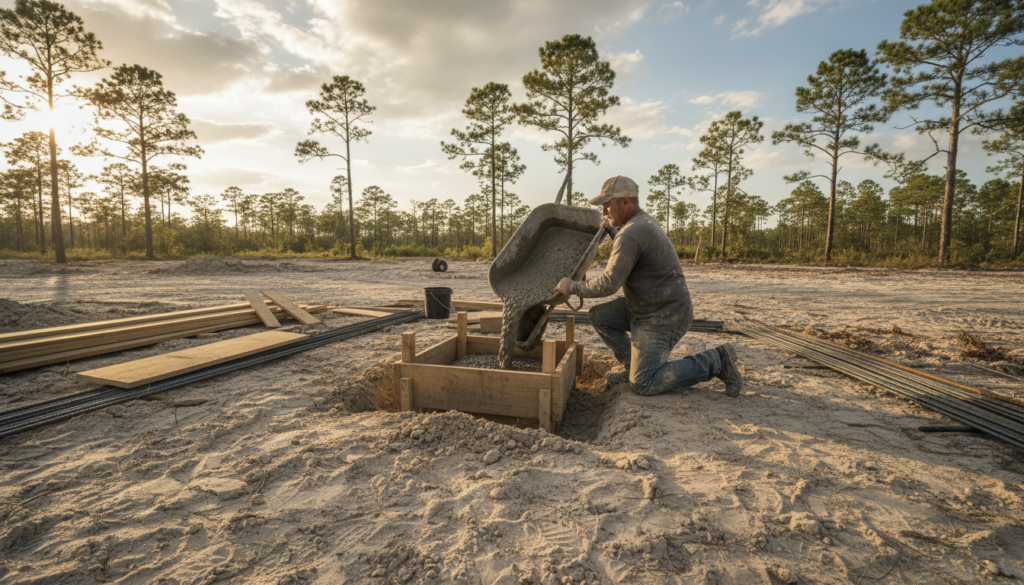
- Footings and post anchors — dig and pour concrete footings sized for local wind-load requirements, then set galvanized post anchors.
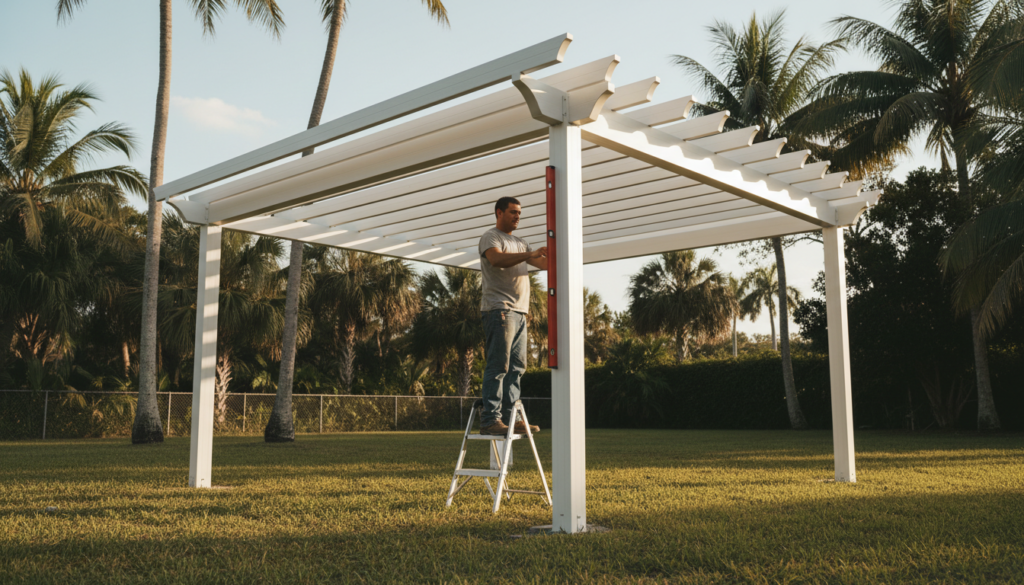
- Post installation — set and plumb vertical posts, bracing them until beams go in.
- Beam and rafter framing — attach horizontal beams and cross rafters, spacing them for shade coverage and structural rigidity.
- Roof style installation — add lattice, louvers, or a solid covered-porch panel depending on the shade level you want.
- Finishing — stain or seal wood, or check fastener torque on metal frames, then clean up the site.
Foundation Mistakes That Cause Problems Later
Skipping proper footings is the single most common failure point we see when homeowners attempt building a pergola themselves. A post set in loose soil or a shallow footing will lean within a couple of storm seasons.
⚠️ Common Mistake: Using deck blocks instead of poured footings might save a weekend, but it won’t hold up to Florida’s wind gusts — inspectors in several counties will flag it during permit review.
Pergola Costs in Florida: What to Budget For
Quick Answer: A basic wood pergola kit starts around $3,000 installed, while a custom aluminum structure with motorized louvers and solar integration can run $12,000-$15,000 or more.
Cost swings mainly on three factors: material, size, and add-ons like lighting, screens, or power features. A 12×12 wood pergola is typically the entry point; a 16×20 aluminum structure with a motorized roof sits at the higher end.
What Drives the Price Up or Down
Square footage matters most, followed by material choice and whether you’re adding electrical for fans, lights, or a motorized pergola roof. Custom shapes — attached to the house, wrapping a pool, or matching an existing custom outdoor structure — add labor time.
📊 Data Point: According to the U.S. Census Bureau’s American Housing Survey, outdoor living upgrades remain among the top reported home improvement categories nationally, reflecting steady demand for backyard structures like pergolas and covered patios.
Rent-to-own and financing plans are available for homeowners who’d rather spread the cost over time instead of paying the full amount upfront — something we recommend asking about before assuming a bigger structure is out of budget.
Motorized, Solar, and Covered Pergola Upgrades
Quick Answer: Motorized louvered roofs adjust shade at the push of a button, while a pergola with solar panels can offset energy costs — both are increasingly popular upgrades for 2026 backyard projects.
A motorized pergola uses adjustable aluminum louvers controlled by a remote or wall switch, letting you dial in full sun, full shade, or anything between. It’s a premium option, but for homeowners in hot markets like Tampa and Orlando, the flexibility gets used constantly.
Solar-Ready Pergola Roofs
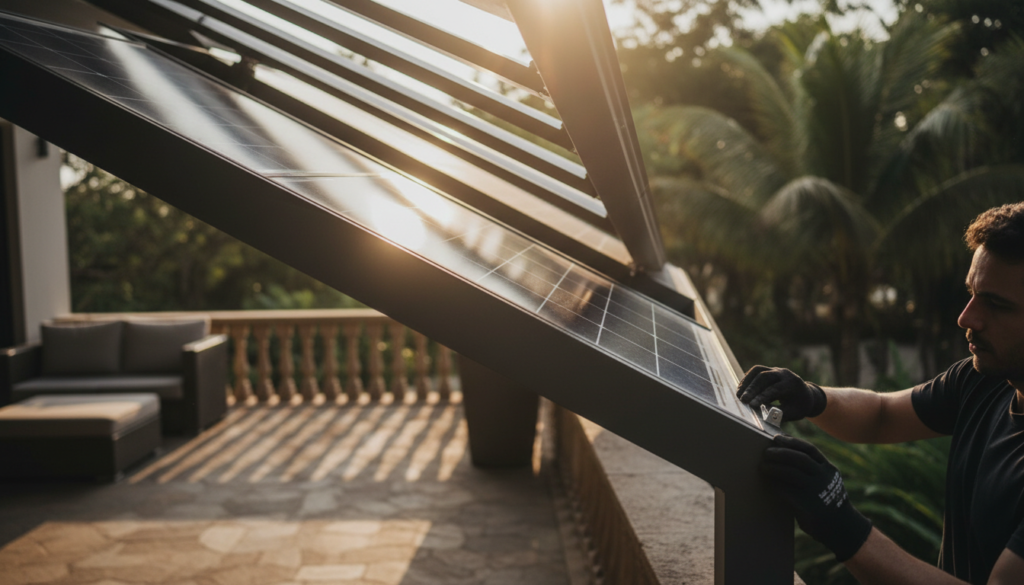
A pergola with solar panels mounts photovoltaic panels directly onto the roof structure, generating power while still providing shade below. The U.S. Department of Energy notes that properly oriented solar installations can meaningfully offset household electricity use, though actual savings depend on panel count, orientation, and local sun exposure.
✅ Quick Tip: If solar is on your radar, mention it before construction starts — the frame needs reinforced beams to carry panel weight, and retrofitting later costs more than planning it up front.
DIY vs Hiring a Pergola Contractor
Quick Answer: A skilled DIYer can build a simple wood pergola in a weekend, but permitted, wind-rated, or motorized structures are best left to a licensed pergola contractor.
I’ve watched homeowners take on a basic 10×10 kit successfully — it’s genuinely doable with a helper, a level, and a weekend. Where it gets risky is anything attached to the house, anything over a certain footprint, or anything involving electrical work for lighting or motorization.
When to Call the Pros
If your project needs a permit, involves solar or motorized components, or you simply don’t own a concrete mixer, hiring pergola installers saves time and avoids costly rework.
| Factor | DIY | Professional Build |
|---|---|---|
| Simple 10×10 wood kit | Good fit | Optional |
| Attached or covered-porch style | Not recommended | Recommended |
| Motorized or solar roof | Not recommended | Required |
| Permit-required builds | Risky | Recommended |
💡 Expert Insight: Most permit rejections we see stem from missing engineering documentation for footings — something an experienced pergola contractor handles as part of the build, not an afterthought.
For buyers weighing a pergola against a fully enclosed option, browsing our carports or metal building lineups is worth a look — some clients end up choosing a hybrid structure instead.
Permits and Florida Building Codes
Quick Answer: Most Florida counties require a permit for pergolas over a certain footprint or any structure attached to the home, and wind-load engineering is almost always required.
Florida’s building code leans heavily on wind-resistance standards because of hurricane risk. The International Code Council publishes the model building codes that most Florida jurisdictions adopt and localize, covering everything from footing depth to fastener spacing.
Local Permit Realities
We’ve walked clients through permit questions from Ocala to Palatka, and the rules genuinely vary by county — some exempt small freestanding structures, others don’t. If you’re unsure, our Marion County shed permit resource breaks down a similar process that applies conceptually to accessory structures like pergolas.
⚠️ Common Mistake: Assuming "it’s just a pergola, not a building" exempts you from permitting. Many counties classify attached or large freestanding pergolas the same as any other accessory structure.
As of 2026, wind-load standards in coastal and central Florida counties remain among the strictest in the country, so working with a contractor familiar with local inspectors — whether you’re near Ocala or Gainesville — saves real headaches during inspection.
FAQ
How much does building a pergola cost in Florida?
Most Florida pergola projects range from $3,000 for a basic wood kit to $15,000 or more for a custom aluminum, motorized, or solar-integrated structure. Size, material, and electrical add-ons are the biggest cost drivers.
Do I need a permit for a pergola in Florida?
In most counties, yes — especially if the pergola attaches to your home or exceeds a certain square footage. Requirements vary by county, so checking with local building officials before starting is the safest move.
What is the best material for a pergola in Florida’s climate?
Aluminum and metal pergolas hold up best against Florida’s humidity, UV exposure, and termite pressure, requiring almost no annual maintenance. Wood offers a classic look but needs resealing every 1-2 years to prevent rot.
Can a pergola have a solid roof for full rain protection?
Yes — pairing a pergola frame with solid or louvered panels creates a pergola covered porch style structure that blocks rain while keeping the open-air aesthetic. This is a popular option for homeowners wanting year-round use rather than just shade.
How long does it take to build a pergola?
A simple DIY kit can go up in a weekend, while a permitted, custom, or motorized structure built by professional pergola installers typically takes one to two weeks from footings to finish, depending on permitting delays.
Is a motorized pergola worth the extra cost?
For homeowners who use their backyard year-round, a motorized pergola’s adjustable louvers offer real flexibility between full sun and full shade. It’s a premium upgrade best suited to those who already plan to spend significant time outdoors.
Where can I find a reliable pergola contractor near me?
Look for a contractor with local permitting experience in your specific Florida county, since wind-load and inspection requirements differ across the state. Sandalwood Sheds serves homeowners throughout Ocala, Gainesville, Tampa, Orlando, and surrounding growth areas with custom outdoor structure builds.
Final Thoughts
Building a pergola is a manageable project when you plan the material, footings, and permit steps correctly from the start. Florida’s climate rewards aluminum and metal frames, while add-ons like motorized louvers or solar panels turn a simple shade structure into a genuine outdoor living upgrade. Whether you’re in Ocala, Gainesville, or Tampa, matching the structure to your local wind and permit requirements is what separates a pergola that lasts decades from one that needs rework in year three.
- Decide on wood, metal, or aluminum based on maintenance tolerance and budget.
- Measure your space and sketch rough dimensions before requesting quotes.
- Check your county’s permit requirements for attached vs freestanding structures.
- Ask about rent-to-own or financing if upfront cost is a concern.
- Request a quote from a local pergola contractor familiar with Florida wind codes.
Sandalwood Sheds builds and installs custom outdoor structures across Florida under applicable state contractor licensing requirements. Ready to start your project? Contact our team today for a free backyard consultation and quote.