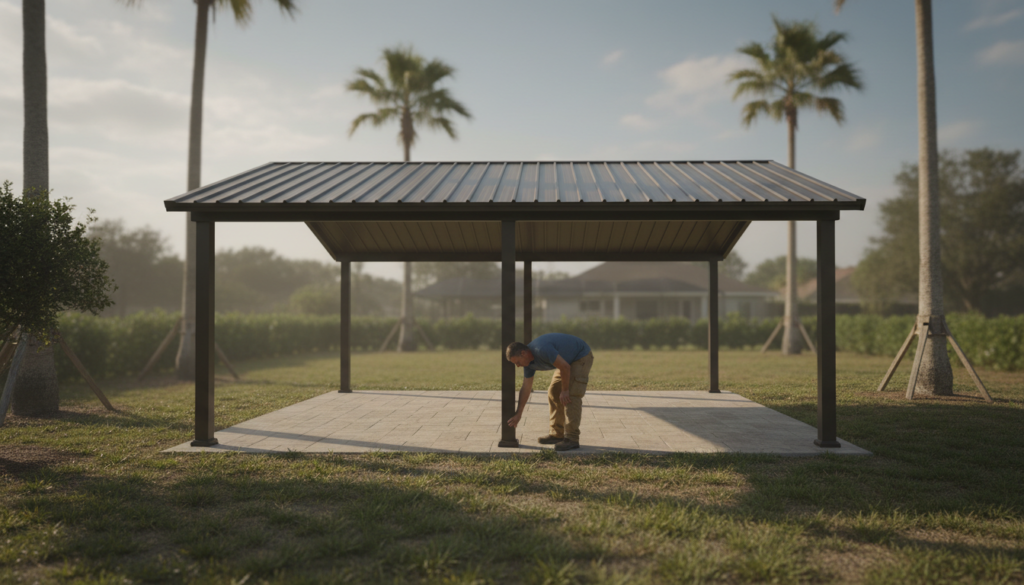
A metal outdoor pergola is a steel or aluminum framed shade structure built to handle Florida sun, wind, and humidity better than wood ever could. It skips the rot, termites, and repainting that wear down timber structures within a few seasons. For homeowners from Ocala to Tampa, that means a shaded patio that actually survives hurricane season instead of becoming next year’s repair project.
Many folks still picture a flimsy white lattice frame when they hear "pergola," but today’s metal versions are a different animal. They’re engineered with real posts, welded or bolted joints, and options for solid roofing and privacy panels. Some can even be closed in on the sides to create a screened room. If you’ve been Googling an outdoor pergola with roof and sides, you’re really looking for a hybrid structure — part pergola, part covered patio — and metal delivers that combination best.
📌 Key Takeaways
- A metal outdoor pergola resists Florida humidity, insects, and UV damage far better than wood.
- Roofed and sided versions turn an open frame into usable shade year-round.
- Expect roughly $3,000–$12,000 installed, depending on size and roof style.
- Rent-to-own and financing options exist for buyers who don’t want to pay all at once.
- Permitting rules vary by county, so check local requirements before you build.
Jump to a Section
- What Makes It a Metal Outdoor Pergola
- Metal vs. Wood in Florida Climates
- Roof and Side Style Options
- Costs, Sizing, and Financing
- Installation and Permitting
- Maintenance and Long-Term Care
- FAQ
What Makes It a Metal Outdoor Pergola
Quick Answer: A metal outdoor pergola uses a steel or aluminum frame instead of wood, giving it more strength, less maintenance, and a longer service life in hot, wet climates.
The frame is the whole story here. Powder-coated steel posts and beams resist rust, warping, and pest damage that plague wooden pergolas in Central Florida’s humidity. Most kits bolt together on a concrete pad or footers, so there’s no exposed lumber soaking up rain.
Frame Materials Explained
Aluminum frames are lighter and naturally corrosion-resistant, which suits coastal areas like Daytona Beach or Saint Augustine. Galvanized or powder-coated steel is heavier but offers more rigidity for larger spans and attached roof panels. Either material outperforms untreated wood over a 15- to 20-year span.
💡 Expert Insight: In our experience building accessory structures across Marion and Alachua counties, steel-framed roofs handle summer storms with far less flexing than wood trusses of the same size.
Metal vs. Wood in Florida Climates
Quick Answer: Metal outperforms wood on durability and upkeep, while wood still wins on that classic rustic look some homeowners prefer.
Wood pergolas need re-staining every one to two years in Florida’s sun and rain cycle. According to the National Weather Service, Central Florida sees over 100 days a year with heat index values above 90°F, which accelerates wood cracking and fading fast.
| Feature | Wood Pergola | Metal Outdoor Pergola |
|---|---|---|
| Termite/rot resistance | Low | High |
| Maintenance frequency | Annual staining/sealing | Occasional wash-down |
| Typical lifespan | 8–12 years | 20+ years |
| Wind performance | Moderate | Strong (engineered connections) |
| Upfront cost | Often lower | Moderate to higher |
Why Rust Resistance Matters Here
Gulf and coastal humidity speeds up corrosion on untreated metal, so finish quality matters. Powder-coated or galvanized finishes hold up far longer than bare or painted steel, especially near Tampa and New Port Richey where salt air is common.
⚠️ Common Mistake: Buyers sometimes choose a bare-metal frame to save money, then watch surface rust appear within a single rainy season. Always confirm the coating type before you buy.
Roof and Side Style Options
Quick Answer: You can choose an open lattice top, a solid metal roof, or a fully sided version that functions like a screened or enclosed room.
Open-lattice metal pergolas give partial shade and let rain through, which some homeowners like for plants underneath. A solid-roof version blocks sun and rain completely, making it closer to a covered patio.
Adding Sides for Privacy and Wind Breaks
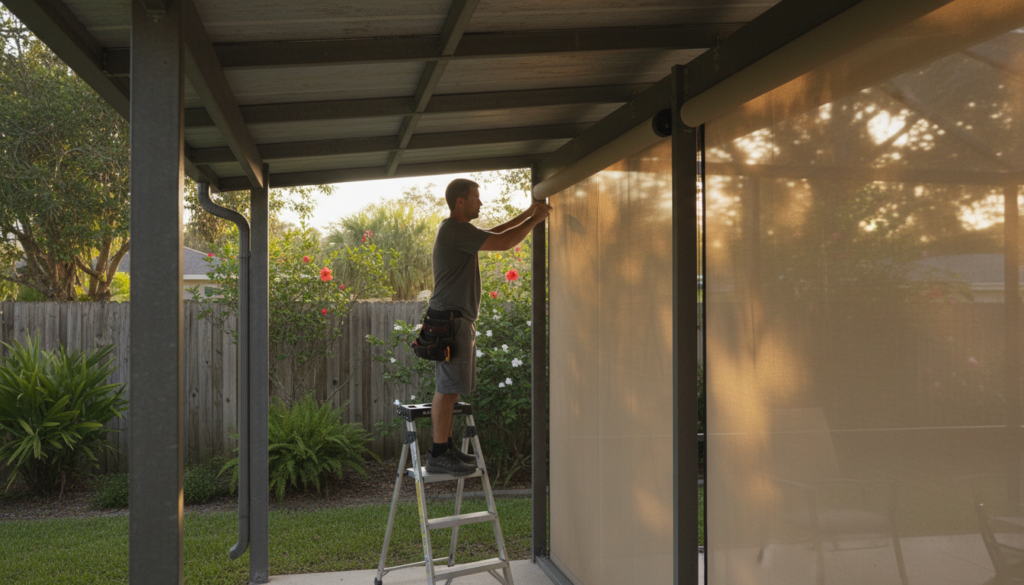
An outdoor pergola with roof and sides is popular for pool areas and outdoor kitchens because it blocks afternoon glare and neighbor sightlines. Screen panels keep bugs out while lattice or louvered sides add partial privacy without full enclosure.
If you want something closer to a finished room rather than a pergola, it’s worth comparing options like a Smart Space finished building or a fully custom accessory build, both of which can pair with an attached metal shade structure.
📊 Data Point: The U.S. Department of Energy notes that shading a patio or west-facing wall can reduce indoor cooling costs by cutting direct solar heat gain, which matters in Florida’s long cooling season.
Costs, Sizing, and Financing
Quick Answer: Most metal outdoor pergola projects run $3,000 to $12,000 installed, with price driven mainly by size, roof type, and whether sides are added.
A basic 10×10 open-frame kit sits at the lower end of that range. Adding a solid roof, gutters, or full-side enclosure pushes costs toward the higher end, similar to pricing on carports or small metal buildings of comparable footprint.
Rent-to-Own and Payment Plans
Not every homeowner wants to pay the full amount upfront, and that’s fine. Rent-to-own and financing plans are available, which lets you spread the cost over time while still using the structure right away.
| Size | Style | Estimated Range* |
|---|---|---|
| 10×10 ft | Open lattice, no sides | $3,000–$5,500 |
| 12×16 ft | Solid roof, no sides | $6,000–$9,000 |
| 12×20 ft | Solid roof with sides | $9,000–$12,000+ |
*Estimates only; final pricing depends on materials, site prep, and local permit fees.
✅ Quick Tip: Ask about rent-to-own terms before committing to a large upfront purchase — it’s an easy way to add shade this season without draining savings.
Installation and Permitting
Quick Answer: Most Florida counties require a building permit for a permanent metal outdoor pergola, especially if it’s anchored to a slab or attached to your house.
Requirements differ by jurisdiction, so a structure that’s permit-exempt in one county may need approval in another. Homeowners in Marion County can review specifics through our shed and structure permit guide, which covers general permitting basics that often apply to accessory structures too.
Wind Load and Anchoring Requirements
Florida’s building code sets minimum wind-load standards for outdoor structures, particularly in coastal wind zones. The Florida Building Commission publishes current code editions that installers reference for anchoring and connection details. Proper footing depth and anchor bolts matter more than the frame material itself when it comes to storm performance.
We’ve installed shade structures for customers in Ocala, Gainesville, and Lakeland, and the anchoring step is where DIY kits most often fall short. A few extra footers now can prevent a costly rebuild after the next tropical storm season.
💡 Expert Insight: If your metal outdoor pergola will attach to your house, get written confirmation from your installer that the ledger connection meets local wind-load requirements — this is the detail inspectors check first.
Maintenance and Long-Term Care
Quick Answer: Metal outdoor pergolas need far less upkeep than wood, but they still benefit from periodic cleaning and hardware checks.
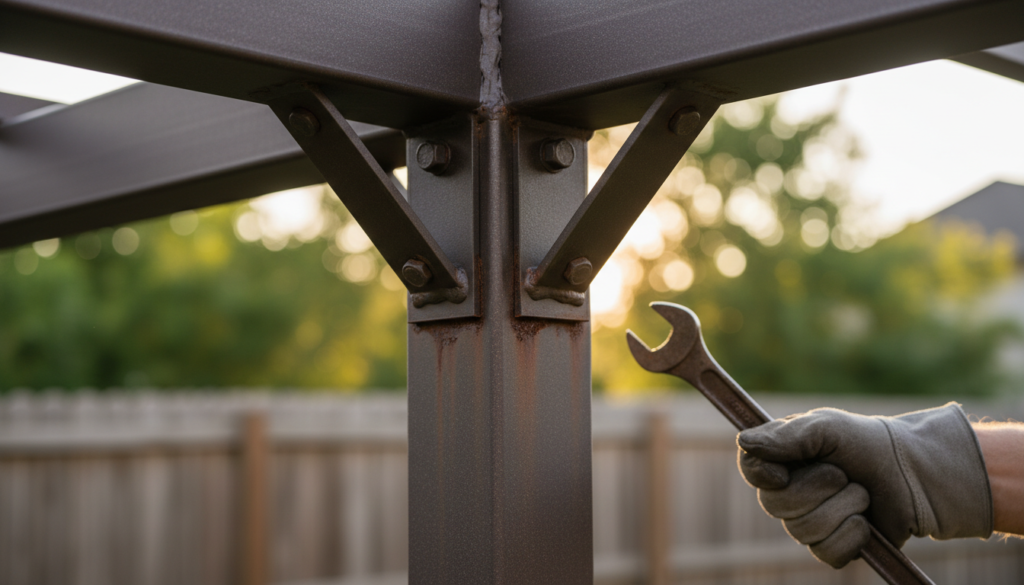
A simple hose-down or mild soap wash a couple of times a year keeps pollen, mold, and salt residue from building up on the frame. Check bolts and connectors annually, since seasonal temperature swings can loosen fasteners over time.
Signs It’s Time for a Repair or Upgrade
| Symptom | Likely Cause | Recommended Action |
|---|---|---|
| Surface rust spots | Coating wear | Touch up with matching powder-coat paint |
| Loose or wobbly posts | Fastener or footing issue | Tighten hardware or re-anchor footing |
| Sagging roof panels | Undersized frame for span | Add support post or consult installer |
| Faded panel color | UV exposure over years | Consider replacement panels |
According to the Environmental Protection Agency, UV exposure is a leading cause of material degradation in outdoor structures, which is why quality powder-coating matters as much as the frame gauge itself.
FAQ
What is the average lifespan of a metal outdoor pergola?
A well-built metal outdoor pergola with a quality powder-coated finish typically lasts 20 years or more with basic maintenance. Wood alternatives usually need major repairs or replacement within 8 to 12 years in Florida’s climate.
Can a metal pergola have a solid roof and sides added later?
Yes, many metal frame kits are designed so roof panels and side screens can be added after initial installation. It’s still smoother and often cheaper to plan the full configuration upfront with your installer.
Do I need a permit for an outdoor pergola in Florida?
Most counties require a permit for permanent structures anchored to a slab or attached to a house, though rules vary locally. Check with your county building department or review a local permit resource before starting construction.
How much does an outdoor pergola with roof and sides cost?
A fully roofed and sided metal pergola generally runs $9,000 to $12,000 or more, depending on size and finish. Open-frame versions without a solid roof or sides cost significantly less, often starting around $3,000.
Is metal or wood better for a pergola in humid Florida weather?
Metal generally performs better in Florida’s humidity because it resists rot, termites, and warping that affect wood over time. Wood can still work well if it’s properly sealed and maintained every year or two.
Can I finance a metal outdoor pergola instead of paying upfront?
Yes, rent-to-own and financing plans are available for homeowners who prefer to spread payments over time. This makes it easier to add shade this season without a large upfront cost.
What size metal pergola works best for a standard backyard patio?
A 10×10 or 12×16 foot metal outdoor pergola fits most standard patios and covers a dining or lounge area comfortably. Larger footprints work well for pool decks or combined kitchen-and-seating spaces.
Final Thoughts
A metal outdoor pergola gives Florida homeowners durable, low-maintenance shade that stands up to heat, storms, and humidity far better than traditional wood structures. Whether you want an open lattice frame or a fully roofed and sided design, metal construction protects your investment for decades rather than years. Local permitting and wind-load rules do matter, so plan ahead before you build. With financing and rent-to-own options on the table, upgrading your backyard doesn’t have to wait.
- Decide between an open frame, solid roof, or fully sided configuration based on how you’ll use the space.
- Check your county’s permit requirements before ordering materials or scheduling installation.
- Compare financing or rent-to-own terms if you’d rather spread out the cost.
- Request a quote to get accurate sizing and pricing for your property.
Ready to shade your backyard the right way? Contact Sandalwood Sheds today to get a free quote on your metal outdoor pergola project.