Outdoor pergolas and gazebos solve the same problem in different ways: they turn a scorching, storm-exposed backyard into usable living space. A pergola gives you open-lattice shade you can dress up with vines or a canopy, while a gazebo offers a fully roofed, often screened, outdoor covered area. Most Florida homeowners actually need both a shade plan and a rain plan, and picking the wrong structure means either sunburned guests or a soggy cookout.
We build custom outdoor structures across Central and North Florida, and the question we hear most is "which one do I actually need?" This guide breaks down the real differences, honest costs, and planning steps so you can choose with confidence instead of guessing.
📌 Key Takeaways
- Pergolas give partial, adjustable shade; gazebos and pavilions give full weather protection.
- Wood structures need re-staining every 2-3 years in Florida’s humidity; metal frames need less upkeep.
- Marion County and most Central Florida counties require a permit for permanent structures over a certain footprint.
- Rent-to-own and financing options make custom outdoor pavilions accessible without a big upfront cash outlay.
- Placement matters more than style — afternoon sun exposure and drainage should drive your design first.
Table of Contents
- What’s the Real Difference Between Pergolas and Gazebos?
- Why Florida Backyards Need Reliable Outdoor Coverings
- Styles, Materials, and Costs Compared
- Custom Outdoor Pavilions vs. Prefab Kits
- Planning Your Project: Permits and Placement
- Maintenance Tips That Extend the Life of Your Structure
- FAQ
What’s the Real Difference Between Pergolas and Gazebos?
Quick Answer: A pergola is an open-roof frame that filters sunlight, while a gazebo is a fully enclosed, roofed structure built for complete coverage. Both qualify as outdoor pergolas and gazebos in the broader shade-structure category, but they serve different purposes in a yard.
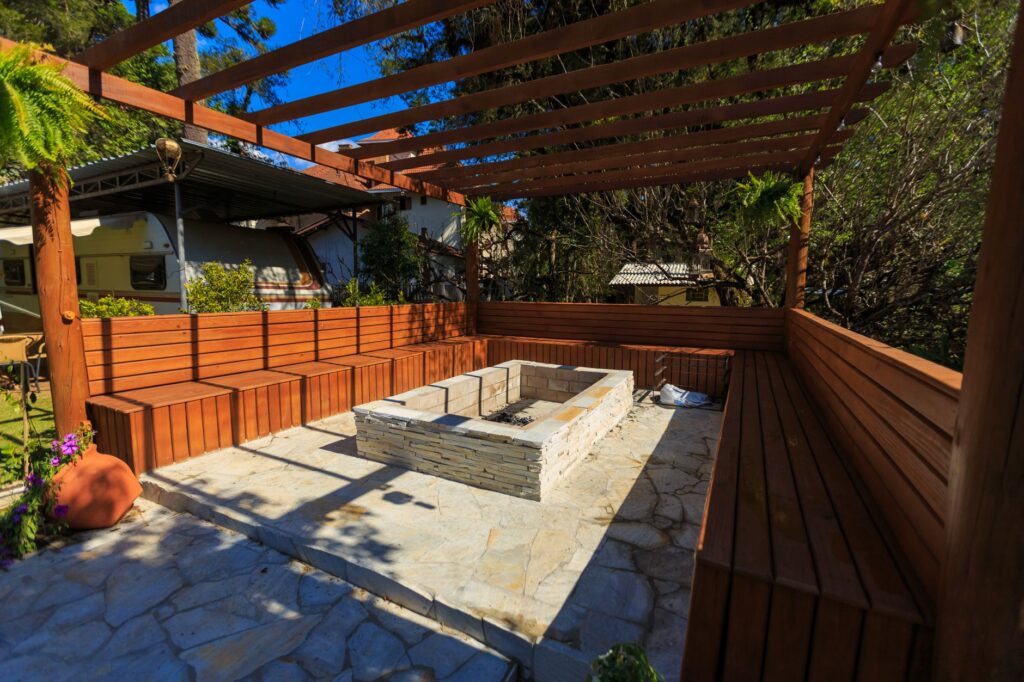
A pergola typically has four posts and a slatted or beamed top, sometimes topped with a retractable canopy. It’s popular near patios where homeowners want dappled light rather than deep shade. Think of it as a framework for outdoor living rather than a weatherproof room.
Pergola vs. Gazebo vs. Pavilion: What’s the Difference?
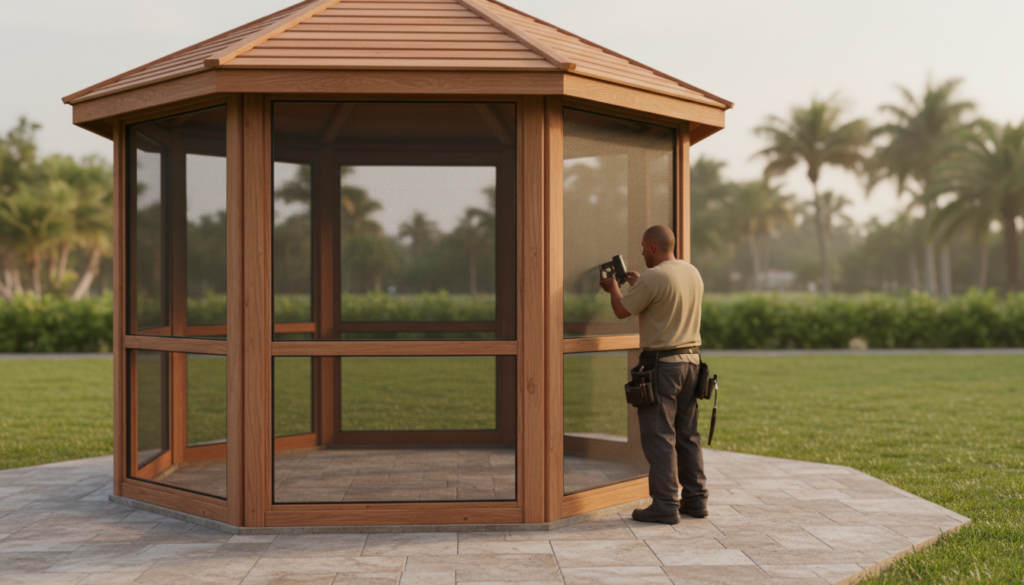
A gazebo is usually hexagonal or octagonal with a solid roof and sometimes screening to keep bugs out. A pavilion, by comparison, is often rectangular with a solid roof and open sides — closer to a custom outdoor pavilion built for entertaining large groups. Many of our Ocala and Gainesville clients start out wanting a pergola but end up choosing a pavilion once they realize how much Florida rain a fully open structure lets through.
💡 Expert Insight: If you host cookouts or want furniture to stay dry, a solid-roof gazebo or pavilion beats a pergola almost every time in our climate.
Why Florida Backyards Need Reliable Outdoor Coverings
Quick Answer: Florida’s UV index and storm frequency make some form of outdoor covering close to essential, not optional, for anyone who wants to actually use their backyard from May through September.
According to the EPA’s sun safety guidance, UV exposure peaks between 10 a.m. and 4 p.m. — exactly the hours most families want to be outside grilling or letting kids play. Without shade, that window shrinks to almost nothing during summer months in Central Florida.
Sun, Storms, and the Real Cost of Going Uncovered
Florida also sees frequent afternoon thunderstorms, and the National Weather Service tracks this pattern as one of the most predictable in the country during hurricane season. A covered outdoor area means a rained-out afternoon doesn’t cancel your plans; it just moves them ten feet to the left.
📊 Data Point: The EPA notes that unprotected skin can burn in as little as 15 minutes during peak Florida summer UV conditions, which is roughly the time it takes to unpack a cooler and set up chairs.
We’ve seen homeowners in Lakeland and Tampa initially skip shade structures to save money, only to circle back a year later once they realize their patio furniture sits unused most of the year. A well-placed pergola or gazebo isn’t just aesthetic — it’s what actually gets your backyard used.
Styles, Materials, and Costs for Outdoor Pergolas and Gazebos
Quick Answer: Wood offers the classic look but needs upkeep, metal holds up better against humidity and pests, and vinyl needs the least maintenance but costs more upfront. Choose based on how much time you want to spend on annual maintenance.
Wood vs. Metal vs. Vinyl: Which Holds Up in Florida?
Wood pergolas are still the most requested style because they blend into a yard naturally and can be stained to match a home. However, Florida humidity accelerates rot if the wood isn’t properly sealed and re-treated. Metal-framed structures, including many of our custom builds, resist warping and termites better, which matters a lot in Marion and Alachua counties.
| Material | Upfront Cost | Maintenance | Best For |
|---|---|---|---|
| Wood | Moderate | High — restain every 2-3 years | Traditional curb appeal |
| Metal | Moderate-High | Low — occasional rust check | Storm-prone areas, low upkeep |
| Vinyl | High | Very Low | Long-term, hands-off owners |
| Fabric/canopy tent structures | Low | Moderate — seasonal replacement | Temporary or seasonal shade |
⚠️ Common Mistake: Choosing an untreated wood pergola without a maintenance plan is the number-one reason homeowners regret their purchase within two years.
Costs vary widely depending on size and material, but most homeowners in our service area budget somewhere between a few thousand dollars for a basic kit pergola and considerably more for a fully custom pavilion with electrical and screening. Financing and rent-to-own plans exist specifically because these projects rarely fit neatly into a one-time cash purchase.
Custom Outdoor Pavilions vs. Prefab Kits
Quick Answer: Prefab kits are faster and cheaper but limited in size and design; custom outdoor pavilions cost more but fit unusual lot shapes and can match an existing home’s roofline.
A prefab pergola kit from a big-box store works fine for a small patio, but it rarely accounts for slope, drainage, or an odd-shaped yard. We regularly get calls from homeowners in Saint Augustine and Palatka who bought a kit, then discovered it didn’t fit their space once delivered.
When a Custom Build Makes Sense
If your yard has uneven ground, you want electrical run to the structure, or you’re trying to match an existing metal building or shed’s roofline, a custom outdoor build is worth the extra planning time. Custom projects also let you decide between an open pavilion, a screened gazebo, or a hybrid structure attached to your existing carport.
✅ Quick Tip: Measure your intended footprint and mark it with stakes for a full week before committing — you’ll often notice sun and drainage patterns you missed on paper.
For homeowners already considering a custom carport or an enclosed carport, pairing that structure with an adjoining pavilion is a popular way to create one continuous covered outdoor area without doubling your permit paperwork.
Planning Your Project: Permits and Placement
Quick Answer: Most permanent pergolas, gazebos, and pavilions over a certain size require a county building permit, and placement should be decided before, not after, you pick a style.
Building codes referenced by the International Code Council generally require permits for permanent accessory structures above a set square footage, and Florida counties enforce their own versions of this standard. If you’re in Marion County, our shed permit resource walks through the general process, and much of that logic carries over to pergolas and pavilions too.
Marion County Permit Basics
Homeowners near Ocala and Gainesville should check setback rules before finalizing a design, since structures placed too close to a property line often need a variance. This is exactly the kind of detail that a local builder catches before you pour a single footing.
💡 Expert Insight: We always recommend calling your county building department before ordering materials — a five-minute phone call can save weeks of rework.
In our experience working across Jacksonville, Orlando, and Daytona Beach yards, sun orientation is the single most overlooked planning factor. A pergola facing due west traps late-afternoon heat, while one angled to block the southern sun stays noticeably cooler for evening use.
Maintenance Tips That Extend the Life of Your Structure
Quick Answer: Annual inspections, prompt sealant touch-ups, and clearing debris after storms are the three habits that add years to any outdoor structure.
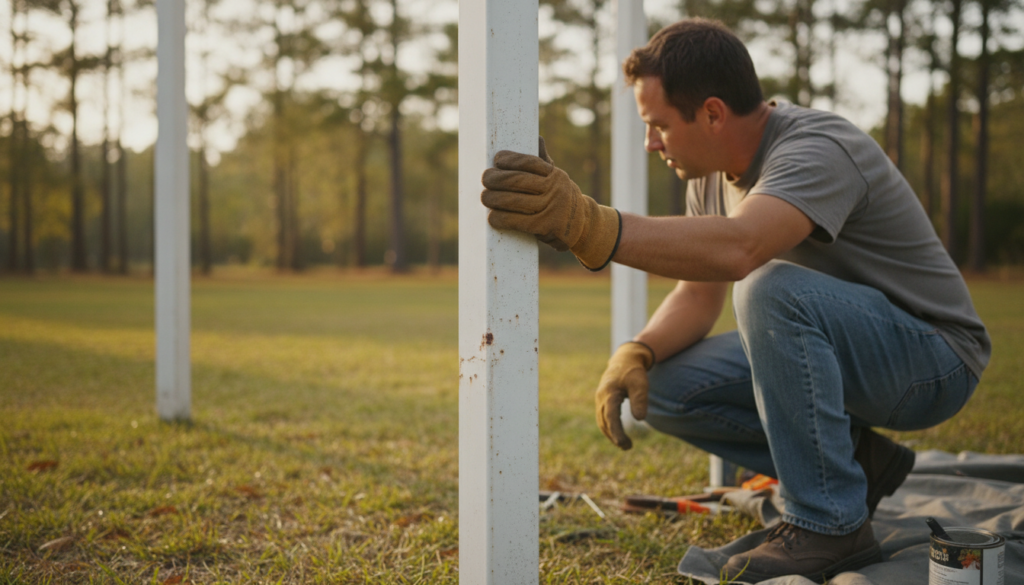
Wood needs resealing roughly every 2-3 years in Florida’s humidity, per general guidance from the U.S. Department of Energy on outdoor material durability in humid climates. Metal structures should be checked annually for rust at joints and fasteners, especially after hurricane season.
Gutter buildup and leaf debris on a solid-roof pavilion can trap moisture against the roofline, so a quick clean-out after major storms goes a long way. Screens on a gazebo also loosen over time and benefit from a yearly tension check.
⚠️ Common Mistake: Skipping post-storm inspections is common, but small loose fasteners after a Tampa or Lakeland thunderstorm can turn into bigger structural issues by next hurricane season.
FAQ
What’s the difference between outdoor pergolas and gazebos?
Outdoor pergolas and gazebos differ mainly in roof coverage — pergolas have open, slatted tops for filtered shade, while gazebos have a solid, often screened roof for full weather protection. Homeowners choose based on whether they want light shade or complete coverage from sun and rain.
How much does a custom outdoor pavilion cost in Florida?
Costs depend heavily on size, material, and add-ons like electrical or screening, with basic kits costing far less than a fully custom build. Getting a quote based on your specific yard is the only reliable way to budget accurately.
Do I need a permit for a gazebo or pergola in Marion County?
Most permanent structures above a certain square footage require a county permit in Marion County and similar Central Florida counties. Checking with your local building department before construction avoids costly rework later.
Can a pergola be attached to an existing carport or shed?
Yes, attaching a pergola or pavilion to an existing carport or shed is a common way to extend covered outdoor living space without a separate foundation. This approach also often simplifies the permitting process since it ties into an existing structure.
What outdoor structure holds up best in Florida heat and storms?
Metal-framed gazebos and pavilions generally hold up better than wood in Florida’s combination of humidity, UV exposure, and storm activity. Wood remains popular for its look but requires more frequent maintenance to match that durability.
Is financing available for outdoor pergolas and gazebos?
Yes, rent-to-own and financing plans are commonly available for custom outdoor structures, making it easier to spread the cost over time instead of paying entirely upfront. This is especially useful for larger custom pavilion projects.
How do I choose the right size gazebo or pavilion for my backyard?
Measure your intended footprint, mark it with stakes for several days, and account for furniture, walkways, and drainage before finalizing dimensions. Most homeowners find they need slightly more space than they initially estimate once furniture is placed.
Final Thoughts
Choosing between outdoor pergolas and gazebos ultimately comes down to how you plan to use your backyard and how much maintenance you’re willing to take on. Open pergolas suit homeowners who want light, adjustable shade, while solid-roof gazebos and pavilions suit families who want full protection from Florida sun and storms. Whichever direction you lean, get your placement, permits, and materials right before you build. Custom builds paired with financing options make it realistic to get the structure you actually want instead of settling for a generic kit.
Next steps:
- Walk your yard and mark your preferred footprint for at least a few days.
- Check your county’s permit requirements before ordering materials.
- Decide between wood, metal, or vinyl based on your maintenance tolerance.
- Request a custom quote to compare pricing against prefab kits.
Ready to add real shade and storm protection to your backyard? Contact Sandalwood Sheds today for a free custom quote on your outdoor pergola, gazebo, or pavilion project.