Premium outdoor structures turn a plain backyard into usable, weatherproof space — without the cost or wait of a home addition. Whether you need extra storage, a workshop, or a covered spot for the truck, the right structure pays for itself in convenience and resale value. In Central Florida’s humidity and storm season, though, not every shed or barn is built the same, and picking the wrong one is an expensive mistake.
This guide walks through the styles, materials, sizing, and costs that separate a flimsy box-store kit from a structure that actually holds up. We’ll cover wood versus metal, financing options, permit basics, and how to size a build for your lot. By the end, you’ll know exactly what "premium" should mean when you’re comparing quotes.
📌 Key Takeaways
- Premium outdoor structures use treated lumber or engineered steel rated for Florida wind and moisture, not standard box-store kits.
- Lofted barns and side-lofted barns give the most usable storage per square foot for the price.
- Rent-to-own financing is available, so a quality build doesn’t require paying the full cost upfront.
- Most Florida counties require a permit for structures over 100–200 square feet — check local rules before you order.
- Metal buildings generally cost less upfront and need less maintenance than wood, but wood cabins offer more customization and curb appeal.
Table of Contents
- What Counts as a Premium Outdoor Structure?
- Wood vs. Metal: Picking the Right Material
- Sizing Your Structure to Your Lot
- Cost, Financing, and Rent-to-Own Options
- Permits and Local Rules in Central Florida
- Frequently Asked Questions
What Counts as a Premium Outdoor Structure?
Quick Answer: A premium outdoor structure is built with weather-rated materials, engineered framing, and finish details that hold up for decades — not a kit shed assembled from thin panels. It’s the difference between a backyard investment and a five-year replacement.
The term gets tossed around loosely in home improvement marketing, so it helps to define it plainly. A structure earns the label when it uses pressure-treated or engineered lumber, hurricane-rated fasteners, and a roof system designed for Florida’s wind loads. According to the National Weather Service, Central Florida sees frequent tropical-storm-force winds during hurricane season, so structural fasteners matter as much as the walls themselves.
Common Styles Worth Considering
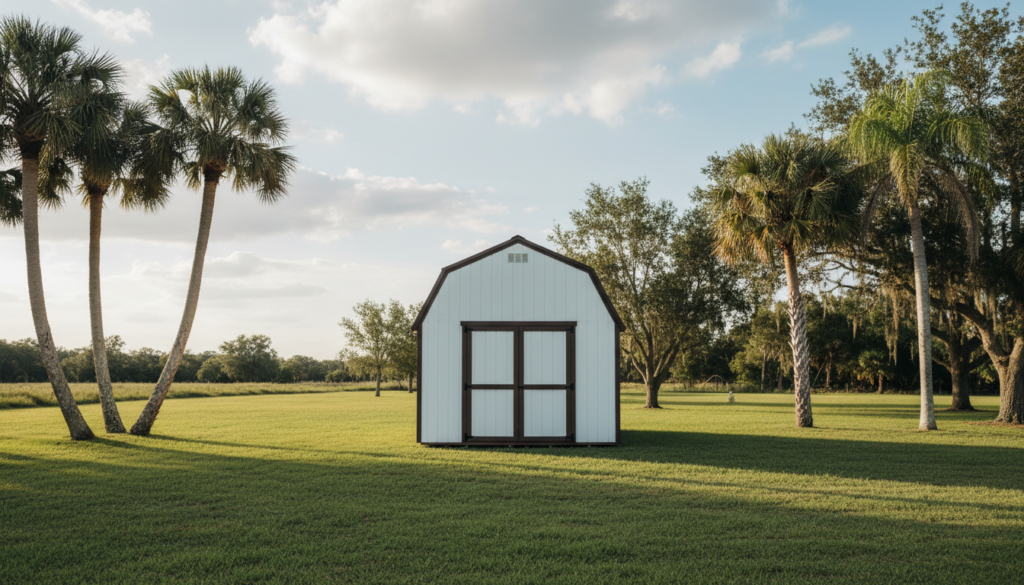
Most homeowners we work with land on one of a few proven layouts. A lofted barn maximizes overhead storage for seasonal gear, while a side lofted barn adds a taller side wall for equipment or a workbench. For those wanting a finished, livable feel, our cabin line includes porch options and windows that feel closer to a small guest house.
✅ Quick Tip: Walk your yard at different times of day before choosing a spot — afternoon shade extends the life of paint and roofing on wood structures.
Wood vs. Metal: Picking the Right Material
Quick Answer: Wood structures offer more customization and a classic look; metal buildings cost less upfront and shrug off humidity with almost no maintenance. The right choice depends on budget, style preference, and how much upkeep you’re willing to do.
I’ve walked plenty of buyers through this exact decision on-site in Ocala and Gainesville, and the answer usually comes down to what they picture the structure doing in ten years. Wood cabins, like our deluxe lofted cabin, take stain and trim well and can match a house’s siding. Metal buildings, such as our side utility line, resist termites and rot outright, which matters in Florida’s damp climate.
Maintenance Reality Check
Wood needs re-staining every few years to fight UV fade and moisture swelling. Metal needs almost nothing beyond an occasional rinse, though scratched paint can eventually rust if ignored. The EPA notes that material choice and coatings significantly affect a structure’s lifespan in humid, high-UV regions — which describes most of Florida.
| Factor | Wood Structures | Metal Buildings |
|---|---|---|
| Upfront cost | Moderate to higher | Lower to moderate |
| Maintenance | Re-stain every 3–5 years | Rinse occasionally |
| Customization | High (windows, porches, trim) | Moderate (color, trim options) |
| Pest resistance | Requires treated lumber | Naturally resistant |
| Best for | Curb appeal, workshops, cabins | Budget storage, low-maintenance builds |
⚠️ Common Mistake: Buying an untreated or thin-gauge kit shed because it’s cheaper, then paying more within five years to replace rotted panels or rusted seams.
Sizing Your Structure to Your Lot
Quick Answer: Most homeowners underestimate the size they need by at least one size category. A 10×16 often makes more sense than a 10×12 once shelving, a workbench, or a mower are factored in.
Start by listing everything the structure needs to hold, then add walking room around each item. A family storing lawn equipment, holiday decorations, and bikes typically needs at least 120 square feet. Larger households or anyone parking equipment often move toward a custom build sized to the exact footprint of their yard.
Matching Style to Purpose
If the goal is vehicle storage, a custom carport or enclosed option protects against sun and rain without the full cost of a garage. For a home office or studio space, our accessory building line can be finished inside for year-round comfort.
💡 Expert Insight: Measure twice for setback distance from property lines, not just for the structure’s footprint — this is the single most common reason permit applications get sent back for revision.
Cost, Financing, and Rent-to-Own Options
Quick Answer: Premium outdoor structures typically range from a few thousand dollars for a basic utility shed to well over $10,000 for a fully finished cabin or metal building. Rent-to-own financing spreads that cost into manageable monthly payments with no large loan required.
Cost depends on size, material, and finish level, but the biggest budget mistake is comparing sticker price alone. A cheaper structure with a shorter lifespan often costs more per year than a premium build. Rent-to-own is available specifically so families and small business owners don’t have to choose between quality and cash flow — you get the structure now and pay it down over time.
What Affects the Final Price
Roof style, loft space, windows, and door hardware all shift the total. According to the Consumer Financial Protection Bureau, buyers should always confirm the full payment schedule and any early payoff terms in writing before signing a rent-to-own agreement — solid advice for any structure financing.
📊 Data Point: Homeowners who choose engineered, wind-rated structures report fewer storm-related repairs than those with standard box-store kits, based on regional contractor claims data reviewed by industry groups.
Permits and Local Rules in Central Florida
Quick Answer: Most counties require a permit once a structure passes 100–200 square feet, and setback rules vary by property. Always check local requirements before ordering, especially in growing areas like Ocala, Gainesville, and Tampa.
Building codes exist to keep structures standing through severe weather, not to slow homeowners down. The International Code Council publishes the model codes most Florida counties adapt locally, covering wind load, anchoring, and setback minimums. We’ve helped customers in Ocala and across Alachua County navigate this exact process, and our Marion County shed permit guide breaks down the paperwork step by step.
Working With Your Local Office
Call or check your county’s building department website before finalizing a design. Requirements differ meaningfully between, say, Daytona Beach and Lakeland, so don’t assume one county’s rule applies elsewhere. A quick call upfront avoids costly redesigns after delivery.
✅ Quick Tip: Bring your structure’s spec sheet — dimensions, anchoring method, wind rating — to the permit office instead of just a photo. It speeds up approval significantly.
Frequently Asked Questions
What makes a structure count as a premium outdoor structure instead of a basic shed?
A premium outdoor structure uses treated or engineered materials, hurricane-rated fasteners, and finish-grade construction designed to last decades, unlike thin-panel box-store kits. It also typically includes customizable layout options like lofts, windows, or porches.
How much do premier outdoor structures cost in Florida?
Prices generally range from around $3,000 for a basic utility shed to $10,000 or more for a fully finished lofted barn cabin, depending on size and features. Financing and rent-to-own options can lower the upfront cash needed.
Do I need a permit for a backyard outdoor structure in Marion County?
Most structures over 100–200 square feet require a permit in Marion County, and setback distances from property lines also apply. Our Marion County shed permit resource walks through the current requirements.
Is metal or wood better for a shed in Ocala or Gainesville’s humid climate?
Metal buildings resist rot and termites with minimal upkeep, making them a strong fit for humid Central Florida conditions. Wood cabins offer more customization and curb appeal but need periodic re-staining to hold up long-term.
Can I finance an outdoor structure without a large down payment?
Yes, rent-to-own financing is available and spreads the cost into monthly payments instead of requiring a big upfront loan. It’s a common path for families who want a quality build without draining savings.
How big of a shed do I actually need for a typical Florida backyard?
Most households underestimate their needs; a 10×16 often fits better than a 10×12 once equipment, shelving, and walking space are considered. Custom builds are available if your storage needs go beyond standard sizing.
Are metal buildings strong enough for hurricane season in Central Florida?
Engineered metal buildings with proper anchoring are built to meet regional wind-load standards referenced by model building codes. As always, confirm the specific wind rating and anchoring method with your builder before ordering.
Final Thoughts
Premium outdoor structures are less about a marketing label and more about materials, engineering, and fit for your actual lifestyle. Whether you land on a wood cabin, a lofted barn, or a metal utility building, the goal is a structure that survives Florida weather and earns its keep for years. Financing options like rent-to-own make that quality build accessible without a big upfront payment, and checking local permit rules early keeps the whole project on schedule.
- List everything you need the structure to store or support.
- Decide between wood and metal based on maintenance tolerance and budget.
- Check your county’s permit and setback rules before finalizing size.
- Compare financing options, including rent-to-own, against total lifetime cost.
- Request a detailed quote that specifies materials, anchoring, and wind rating.
Sandalwood Sheds builds and delivers across Ocala, Gainesville, Tampa, Orlando, and the surrounding Central Florida service area. Contact our team today for a free quote on your next premium outdoor structure.