When you type "outdoor furniture near me" into a search bar, you’re usually chasing more than a chair — you want a finished, protected place to sit outside. A sofa or dining set left uncovered in Central Florida fades, warps, and mildews within a season or two. The real fix isn’t just better furniture; it’s the right structure sheltering it, whether that’s a pavilion, pergola, porch, or shed.
Many homeowners assume furniture quality alone determines how long a patio set lasts. In reality, sun and rain exposure do far more damage than fabric choice. As of 2026, more Florida homeowners are pairing furniture purchases with a covered structure from the start, rather than replacing cushions every summer. This guide walks through the coverings that make outdoor furniture last, from custom outdoor pavilions to simple outdoor sheds for off-season storage.
📌 Key Takeaways
- Uncovered furniture in Florida’s climate typically fades or warps within 1-2 seasons without shade or a roofline.
- Custom outdoor pavilions and outdoor pergolas and gazebos both add shade, but pavilions offer full roof coverage year-round.
- An outdoor shed protects cushions, umbrellas, and grills during storm season, freeing up patio space.
- Rent-to-own and financing options make covered structures affordable without a large upfront cost.
- Local building codes and wind-load ratings matter — always confirm requirements before installing a permanent covered area.
Jump to a section:
- Why Furniture Searches Really Need a Covering First
- Custom Outdoor Pavilions: Built-In Protection
- Outdoor Pergolas and Gazebos for Shade With Style
- Outdoor Tent Structures and Portable Coverings
- Outdoor Porches and Covered Areas That Extend Your Home
- Outdoor Sheds: Storage for Furniture and Gear
- Choosing the Right Covering for Your Yard
- FAQ
Why "Outdoor Furniture Near Me" Searches Really Need a Covering First
Quick Answer: Most people searching for outdoor furniture near me actually need shade and rain protection more than they need a new sofa set. Pairing furniture with a covered structure extends its life by years, not months.
Florida’s combination of intense UV and frequent afternoon storms is uniquely hard on outdoor materials. According to the National Weather Service, Central Florida sees thunderstorm activity on more than 80 days a year, much of it concentrated in summer afternoons. That kind of repeated moisture exposure accelerates rust, mildew, and wood rot on unprotected furniture.
The Florida Sun Problem
UV exposure breaks down cushion fabric and plastic resin faster than most owners expect. The EPA’s UV Index resources note that Florida regularly records "very high" UV readings for much of the year. A simple outdoor covering — even a basic outdoor pergola — cuts direct sun exposure dramatically.
Rent-to-Own Makes Coverage Affordable
A common myth is that adding a pavilion or shed to protect furniture is a luxury expense. In practice, rent-to-own financing spreads the cost over manageable monthly payments, similar to a furniture lease. We’ve seen homeowners in Ocala and Lakeland add a small outdoor covered area for less than the cost of replacing a patio set twice.
✅ Quick Tip: Before buying new furniture, measure your patio or planned covered area first — it prevents costly furniture returns later.
Custom Outdoor Pavilions: Built-In Protection for Your Investment
Quick Answer: Custom outdoor pavilions give furniture full overhead coverage, structural permanence, and room to host year-round, making them the strongest long-term option for serious backyard entertaining.
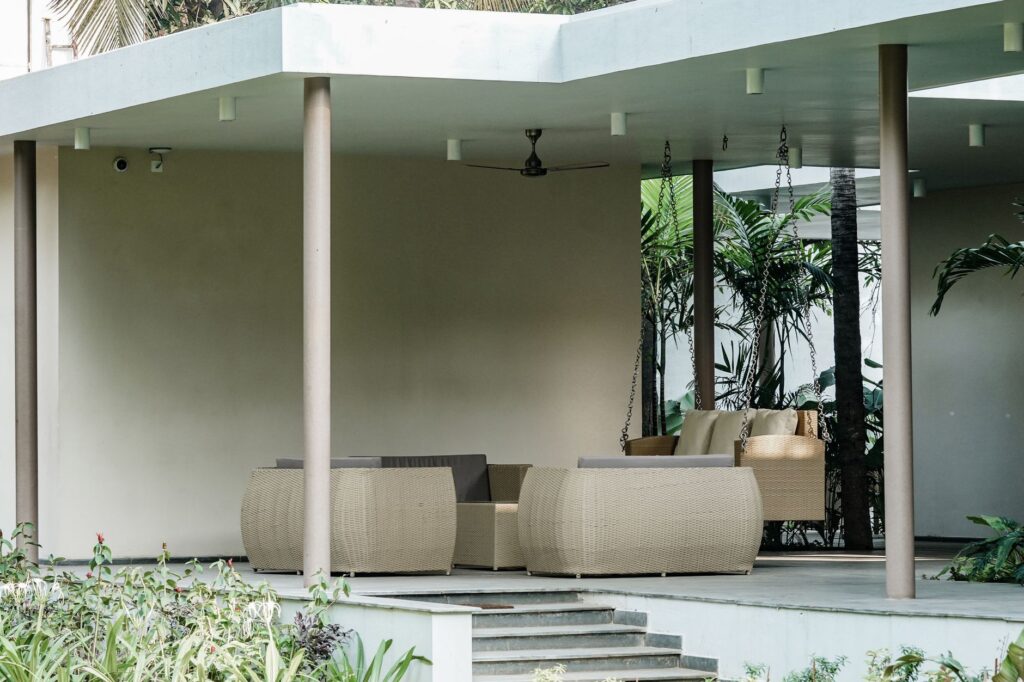
A pavilion is essentially a freestanding roofed structure without full walls — open-air but fully shaded. Unlike a simple canopy, a well-built pavilion uses engineered trusses rated for regional wind loads, which matters given Florida’s hurricane exposure.
What Goes Into a Pavilion Build
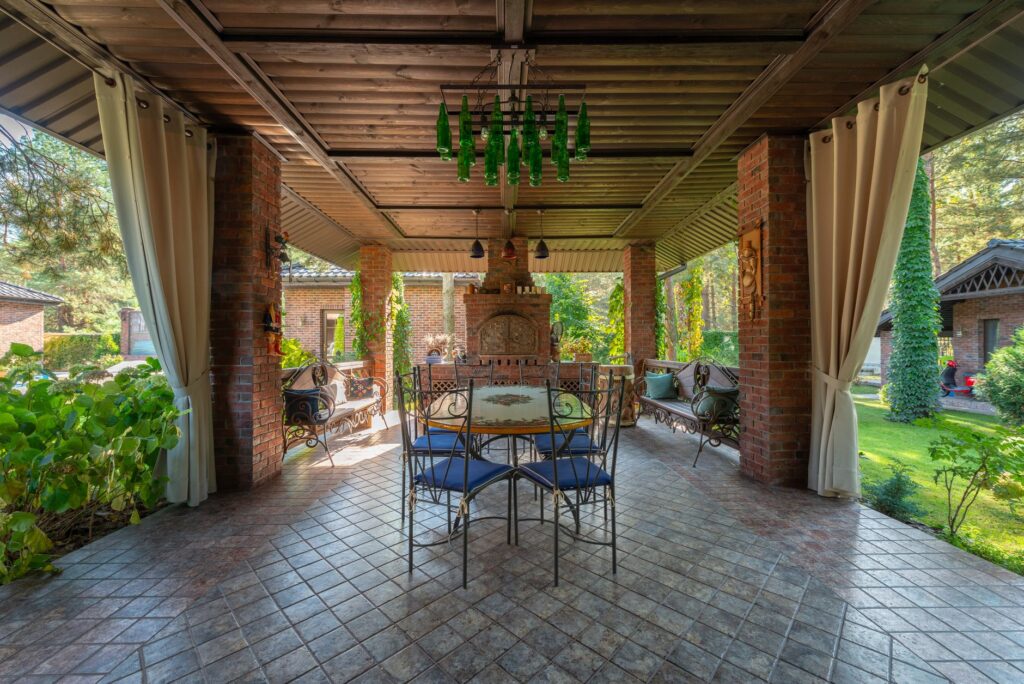
Most custom outdoor pavilions start with a concrete or gravel pad, followed by pressure-treated or metal posts, and a shingled or metal roof system. Homeowners in Gainesville and Tampa often add electrical run for fans or lighting during the build, which is far cheaper than retrofitting later.
💡 Expert Insight: In my experience quoting backyard projects, clients who plan the pavilion footprint around their furniture layout — not the other way around — end up far happier with the finished space.
Pavilions pair naturally with dining sets, outdoor kitchens, and lounge furniture because the roof handles both sun and light rain. For structures that also need enclosed walls, our custom carports can be configured similarly with partial siding.
Outdoor Pergolas and Gazebos for Shade With Style
Quick Answer: Pergolas and gazebos are lighter, more decorative alternatives to pavilions, offering partial shade and strong curb appeal at a lower cost.
Outdoor pergolas and gazebos differ mainly in roof style — a pergola has open slats or a lattice top, while a gazebo has a fully enclosed, often octagonal, roof. Both work well over dining furniture or a small seating group.
| Feature | Pergola | Gazebo | Full Pavilion |
|---|---|---|---|
| Shade coverage | Partial (slatted) | Full | Full |
| Rain protection | Minimal | Good | Best |
| Typical use | Dining, string lights | Seating nook | Entertaining, kitchens |
| Relative cost | Lowest | Moderate | Highest |
Matching Structure to Furniture Style
If your furniture set includes fabric cushions, a gazebo or pavilion protects them better than an open pergola. If you mainly want shade for a small bistro set, a pergola is often enough.
⚠️ Common Mistake: Installing a pergola over upholstered furniture and expecting full rain protection. Slatted roofs let water through — reserve pergolas for hard-surface furniture or add a retractable canopy.
Outdoor Tent Structures and Portable Coverings
Quick Answer: Outdoor tent structures offer temporary or semi-permanent shade for events, seasonal gatherings, or while you decide on a permanent build.
Tent-style coverings are popular for homeowners in Orlando and Daytona Beach who host large gatherings a few times a year but don’t need year-round shelter. They’re also a practical bridge solution while saving for a permanent outdoor covering.
The tradeoff is durability. Fabric tents typically need to come down before major storms, and they don’t offer the same wind rating as a built pavilion or metal structure. For anyone leaning toward a permanent solution, browsing our metal building options shows what a step up in permanence looks like.
📊 Data Point: According to the U.S. Department of Energy, well-placed shade structures can lower nearby surface temperatures enough to noticeably improve outdoor comfort during peak afternoon heat.
Outdoor Porches and Covered Areas That Extend Your Home
Quick Answer: Outdoor porches attach directly to the house, creating a covered area that feels like an extra room and works well for everyday furniture use.
Unlike freestanding pavilions, porches connect to the home’s existing roofline, which simplifies drainage and often qualifies for different permitting than a detached structure. This makes them a favorite for homeowners in Saint Augustine and New Port Richey who want daily-use seating just off the kitchen or living room.
Screened vs. Open Porches
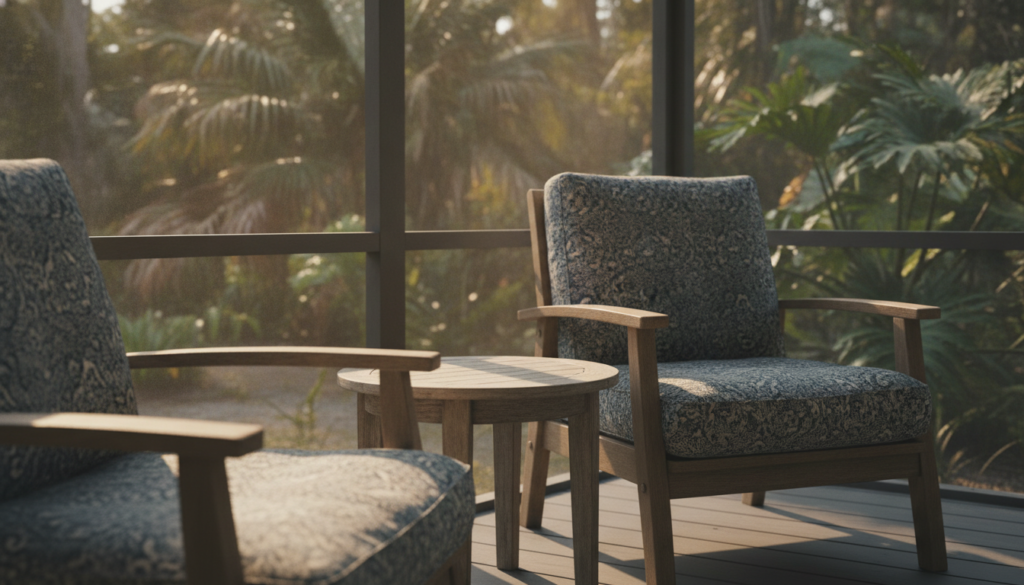
A screened porch keeps insects out, which matters for furniture with cushions that attract debris. An open porch is cheaper but exposes furniture to more wind-blown rain during storms.
Outdoor Sheds: Storage for Furniture and Gear
Quick Answer: An outdoor shed isn’t seating itself, but it’s often the missing piece — a dry place to store cushions, umbrellas, and grills during storm season or winter months.
Even with a pavilion or porch, many owners still want a shed outdoor for overflow storage. Cushions, folding chairs, and pool furniture last far longer when stored dry between uses rather than left outside year-round.
| Shed Size | Best For | Example Model |
|---|---|---|
| 8×10 | Cushions, small tools | Garden Shed |
| 10×16 | Furniture sets, grills | Cottage Shed |
| 12×24+ | Full patio set + equipment | Lofted Barn |
Homeowners in Ocala frequently pair a shed with a pavilion so furniture rotates seasonally — out during dry months, stored during hurricane season. It’s a practical rhythm that noticeably extends furniture life.
✅ Quick Tip: Store fabric cushions in sealed bins inside your shed, not loose, to prevent moisture and pest damage.
Choosing the Right Outdoor Covering for Your Yard
Quick Answer: The right choice depends on budget, how often you entertain, and whether you want a permanent structure or a flexible, temporary one.
Start by asking how the space will be used most: daily family seating favors a porch, occasional entertaining favors a pavilion, and simple sun relief favors a pergola. Storage needs almost always point toward adding an outdoor shed regardless of which shade structure you choose.
DIY vs. Professional Build
| Approach | Pros | Cons |
|---|---|---|
| DIY kit | Lower cost, quick weekend project | Limited wind rating, smaller sizes |
| Professional build | Engineered for local wind codes, financing available | Longer lead time |
We always recommend confirming local permit requirements before starting any covered area project — rules vary by county across our Central Florida service area, including Ocala, Gainesville, and Lakeland. Homeowners can also explore rent-to-own financing to spread the cost of a permanent structure over time rather than paying all at once.
FAQ
What’s the best way to find outdoor furniture near me that will actually last in Florida?
Look for furniture rated for UV and moisture resistance, then pair it with a covering like a pergola, pavilion, or porch. The structure matters as much as the furniture material for long-term durability.
Are custom outdoor pavilions worth the cost compared to a simple canopy?
For most Central Florida homeowners, yes — pavilions offer full rain protection and higher wind ratings than fabric canopies. They also add resale value as a permanent backyard feature.
What’s the difference between outdoor pergolas and gazebos?
A pergola has an open, slatted roof for partial shade, while a gazebo has a solid enclosed roof for full coverage. Gazebos protect furniture from rain; pergolas mainly block direct sun.
Do I need a permit for an outdoor covered area in Florida?
Most counties require a permit for permanent structures like pavilions, porches, or sheds over a certain size. Requirements vary by county, so it’s best to confirm locally before starting the build.
Can outdoor tent structures replace a permanent pavilion?
Tent structures work well for temporary events or seasonal use but shouldn’t be relied on during hurricane season. They lack the wind rating of a permanently anchored pavilion or metal structure.
How do I store outdoor furniture during Florida’s storm season?
An outdoor shed is the simplest solution — store cushions, umbrellas, and lightweight furniture indoors during active storm months. Sealed bins inside the shed add extra protection against humidity.
Does Sandalwood Sheds offer financing for pavilions and sheds?
Yes, rent-to-own and financing options are available, making it easier to add a covered structure without paying the full cost upfront. Details are available through our financing page.
Final Thoughts
A search for outdoor furniture near me almost always leads back to the same conclusion: furniture lasts longer under a proper covering. Whether that’s a custom outdoor pavilion, a pergola, a porch, or simply an outdoor shed for seasonal storage, the structure does more work than most homeowners expect. Central Florida’s sun and storm patterns make this an easy problem to solve once you know where to start.
Next steps:
- Measure your patio or planned covered area before buying new furniture.
- Decide between a pavilion, pergola, porch, or tent structure based on how often you’ll use the space.
- Add an outdoor shed for seasonal furniture and equipment storage.
- Check local permit requirements for your county.
- Explore rent-to-own financing to spread out the cost.
Ready to protect your furniture and finish your backyard? Contact Sandalwood Sheds today to get a custom quote for your covered outdoor space.