Custom outdoor pavilions are freestanding, roofed structures built to shade patios, pools, and gathering spaces without walls closing you in. If you’ve ever sweated through a July cookout in Ocala or watched a sudden Tampa downpour chase your guests indoors, you already know why so many Florida homeowners are adding one. A well-built pavilion turns an unusable backyard corner into the spot everyone wants to be.
At Sandalwood Sheds, we build custom structures across Central and North Florida, and pavilions are one of our fastest-growing requests. They’re not a gazebo (small, often octagonal, decorative) or a plain carport (open on most sides, vehicle-focused) — a pavilion sits in between, offering a true covered outdoor living space sized for furniture, grills, and family gatherings. This guide walks through styles, materials, costs, and the local factors — heat, humidity, wind — that should shape your decision.
📌 Key Takeaways
- Custom outdoor pavilions typically run $4,000–$15,000+ depending on size, roofing, and materials.
- Metal roofing outperforms shingles in Florida’s humidity and holds up better against wind-driven rain.
- Rent-to-own and financing options make a pavilion affordable without a large upfront payment.
- Placement near existing patios or pools maximizes usable shade without extra concrete work.
- Local wind and code requirements vary by county, so a Florida-built structure matters.
Jump to a section:
- What Makes a Pavilion Different From a Gazebo or Carport
- Popular Pavilion Styles for Florida Yards
- Materials That Hold Up in Florida Heat and Storms
- What Custom Outdoor Pavilions Cost in 2026
- Choosing the Right Size and Placement
- Financing and Buying Your Pavilion
- FAQ: Custom Outdoor Pavilions
What Makes a Pavilion Different From a Gazebo or Carport
Quick Answer: A custom outdoor pavilion is a larger, open-sided roof structure designed for entertaining, while gazebos are smaller and decorative and carports are built primarily to shelter vehicles.
People often use "pavilion," "gazebo," and "outdoor covered area" interchangeably, but the distinctions matter when you’re budgeting. Gazebos are usually 10×10 feet or smaller, often hexagonal, and lean decorative rather than functional. A pavilion, by contrast, is built for square footage — think dining sets, outdoor kitchens, or a full lounge area.
Where Pergolas Fit In
Outdoor pergolas and gazebos share the backyard-structure category but differ on coverage. Pergolas typically have slatted or open roofs that filter light rather than block it entirely. If full shade and rain protection matter more than aesthetics alone, a solid-roofed pavilion wins out.
💡 Expert Insight: In my experience walking Florida properties, customers who start out asking for a pergola often switch to a pavilion once they picture using the space during a July afternoon downpour.
How Pavilions Compare to Metal Buildings
Some homeowners considering a pavilion also look at fully enclosed metal buildings for storage plus a covered sitting area. If you need both shelter and enclosed storage, a hybrid layout — a small building with an attached open pavilion — often solves both problems at once.
Popular Pavilion Styles for Florida Yards
Quick Answer: The three most requested pavilion styles in our Florida service area are A-frame barn-style roofs, single-slope lean-tos, and vertical-roof designs — each chosen for how well it sheds rain and resists wind uplift.
Style isn’t just about looks in Florida; roofline shape affects how the structure performs during storm season. A-frame and vertical-roof designs shed water fast, which matters given the state’s intense summer rain patterns.
Vertical Roof Pavilions
Vertical roof panels run top to bottom instead of side to side, which reduces the chance of water pooling and rust developing along seams. This is the same roofing approach we use on our vertical roof carports, and it translates well to open pavilions.
Barn-Style and Cottage-Inspired Roofs
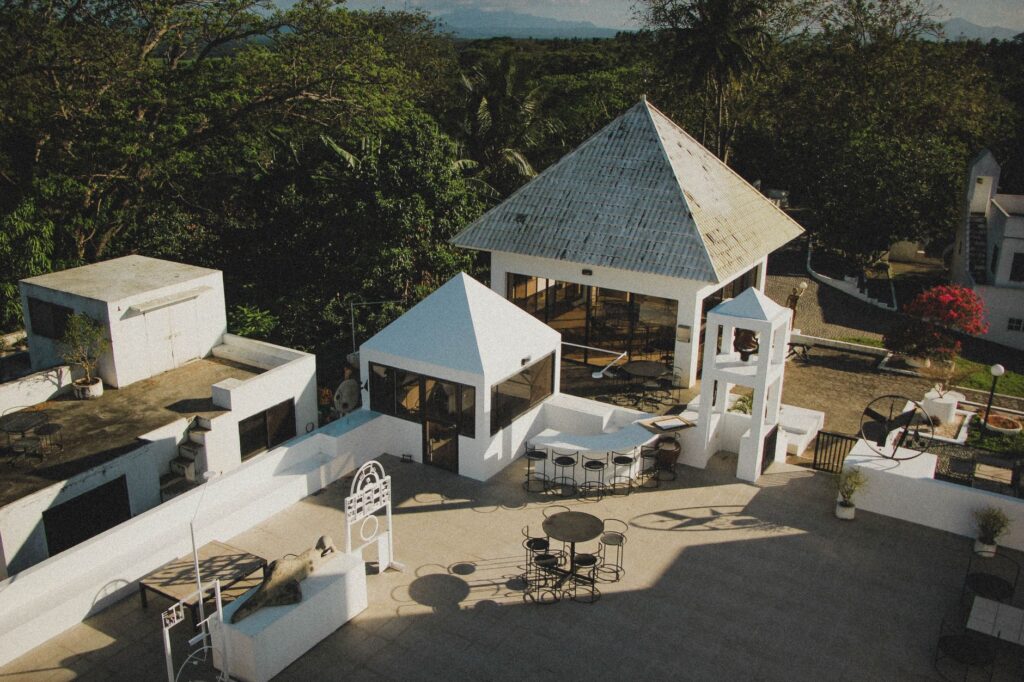
For homeowners wanting a pavilion that visually matches an existing barn-style garage or cottage shed on the property, a matching gable roofline creates a cohesive backyard look rather than a mismatched add-on.
⚠️ Common Mistake: Choosing a flat or low-pitch roof to save money. In Central Florida’s heavy rain, a low pitch increases ponding risk and shortens roof life.
Materials That Hold Up in Florida Heat and Storms
Quick Answer: Galvanized steel framing with a metal roof outperforms wood-only pavilions in Florida’s humidity, termite pressure, and UV exposure — though wood still wins on rustic curb appeal for some buyers.
Heat, humidity, and salt air (closer to the coast in places like Saint Augustine or Daytona Beach) accelerate wear on outdoor structures. According to the National Weather Service, Florida sees some of the highest annual rainfall totals in the country, which means water management in a build matters as much as looks.
Wood vs. Metal Framing
Wood pavilions feel warmer and blend into landscaped yards, but they require more frequent sealing and are more vulnerable to termites and rot in humid climates. Metal-framed structures, similar to our custom carports, need far less annual maintenance.
| Feature | Wood-Frame Pavilion | Metal-Frame Pavilion |
|---|---|---|
| Upfront cost | Lower to moderate | Moderate to higher |
| Maintenance | Sealing every 1-2 years | Occasional cleaning |
| Termite risk | Higher without treatment | None |
| Wind resistance | Good with proper anchoring | Excellent |
| Typical lifespan | 10-20 years | 20-30+ years |
Roofing Material Choices
Metal roofing sheds rain fast and reflects heat, which matters given how the EPA’s sun safety guidance notes prolonged UV exposure raises health risks — a real consideration for anyone spending afternoons under a backyard structure. Shingled roofs can match a home’s existing look but generally need replacement sooner in high-humidity zones.
📊 Data Point: The Centers for Disease Control notes that heat-related illness risk climbs sharply in direct sun exposure situations, reinforcing why shaded, covered outdoor living space isn’t just a comfort upgrade — see the CDC’s heat safety resources for guidance on recognizing symptoms.
What Custom Outdoor Pavilions Cost in 2026
Quick Answer: Most custom outdoor pavilions in our Florida service area cost between $4,000 and $15,000, depending on size, roof material, flooring, and add-ons like electrical or screened panels.
Pricing swings widely because "pavilion" covers everything from a simple 10×12 open-air shelter to a 20×30 structure with a finished floor and lighting. As of 2026, material costs remain a bigger driver of price than labor in most quotes we prepare.
Size-Based Cost Ranges
Smaller pavilions (10×12 to 12×16) generally start around $4,000-$7,000. Mid-size structures (14×20 to 16×24) commonly run $7,000-$11,000, and larger entertaining pavilions with finished touches can exceed $15,000.
Add-Ons That Change the Price
Screened-in panels, ceiling fans, outdoor kitchens, and concrete flooring all add cost but also add usable months per year. A screened pavilion, for instance, extends comfortable use into mosquito season without sacrificing airflow.
✅ Quick Tip: Ask your builder for a line-item quote separating structure, roofing, flooring, and electrical. It makes comparing bids — and financing options — much easier.
Choosing the Right Size and Placement
Quick Answer: Size your pavilion around actual furniture and traffic flow first, then place it to catch prevailing breezes while staying clear of roof drainage lines and setback requirements.
A pavilion that’s too small feels cramped the moment you add a table and grill station. Measure your intended furniture layout first, then add at least 3 feet of clearance on all sides for walking room.
Placement Near Pools and Patios
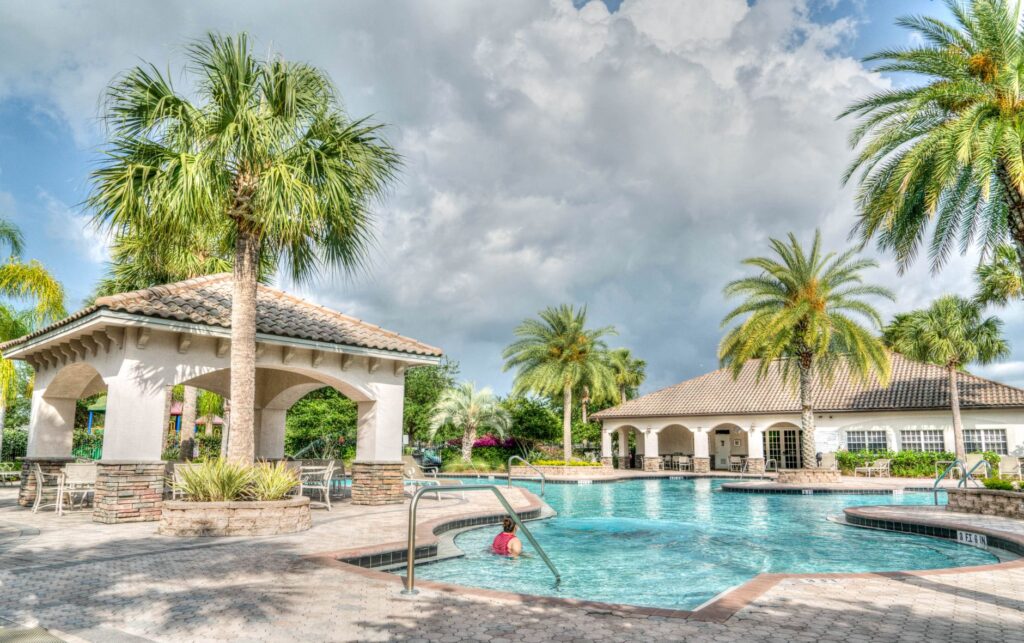
Attaching or positioning a pavilion near an existing pool deck maximizes usable shade without new concrete work. In growth areas like Lakeland, Orlando, and Gainesville, we frequently place pavilions to bridge a pool area and the back door for a seamless outdoor living flow.
Local Code and Wind Considerations
Each Florida county sets its own permitting rules, and wind-load requirements differ by region under the Florida Building Code, overseen by the Florida Building Commission. A local builder familiar with your county’s requirements — whether that’s Marion, Polk, or Duval — saves permitting headaches later.
💡 Expert Insight: We’ve found that pavilions oriented to catch afternoon southeast breezes stay noticeably more comfortable than those tucked against a solid fence line with no airflow.
Financing and Buying Your Pavilion
Quick Answer: Rent-to-own and short-term financing plans let Florida homeowners get a custom outdoor pavilion built now and pay it off over time, without draining savings upfront.
One myth we hear constantly: that custom structures require full cash payment. That’s simply not accurate anymore. Sandalwood Sheds offers rent-to-own arrangements and 90-days-same-as-cash financing for qualifying buyers, which spreads out the cost of a pavilion, carport, or accessory building.
Comparing Buy vs. Rent-to-Own
| Approach | Upfront Cost | Ownership Timeline | Best For |
|---|---|---|---|
| Cash purchase | Full price at delivery | Immediate | Buyers with available savings |
| Rent-to-own | Low down payment | Over agreed term | Buyers wanting lower upfront cost |
| 90-days-same-as-cash | Minimal to none | Paid within 90 days | Short-term budget planning |
Working With a Local Builder
Buyers across our service area — including customers near Ocala — appreciate having a builder who delivers, sets up, and stands behind the structure locally rather than shipping a kit from out of state. Check customer reviews to see how past builds held up.
⚠️ Common Mistake: Assuming financing isn’t available for outdoor structures. Many buyers skip pricing out a pavilion entirely, not realizing flexible payment plans exist.
FAQ: Custom Outdoor Pavilions
How much do custom outdoor pavilions cost in Florida?
Most custom outdoor pavilions cost between $4,000 and $15,000 depending on size, roofing material, and finishing touches like flooring or screening. Larger structures with electrical and concrete flooring sit at the higher end of that range.
What’s the difference between a pavilion and a gazebo?
A pavilion is typically larger and rectangular, built for entertaining space, while a gazebo is smaller, often octagonal, and leans more decorative. Pavilions generally offer more usable square footage for furniture and gatherings.
Can a pavilion be attached to my house or patio?
Yes, many homeowners attach a pavilion roofline to an existing patio or extend it from the home for a seamless covered outdoor living space. Attachment details depend on your home’s structure and local code requirements.
Do I need a permit for a custom outdoor pavilion in Florida?
Permit requirements vary by county under the Florida Building Code, so a structure in Marion County may face different rules than one in Duval or Polk County. A local builder familiar with your area can confirm requirements before construction begins.
Are metal-roofed pavilions better than wood for Florida weather?
Metal roofing generally sheds rain faster and holds up better against humidity and pests than untreated wood, making it a strong choice for Florida’s climate. Wood still appeals to buyers prioritizing a rustic look over low maintenance.
Can I finance a custom outdoor pavilion instead of paying cash?
Yes, rent-to-own and 90-days-same-as-cash financing options are available for qualifying buyers, spreading the cost over time. This makes a custom pavilion accessible without a large upfront payment.
Do you build custom outdoor pavilions near Ocala or Gainesville?
Yes, Sandalwood Sheds serves Ocala, Gainesville, and surrounding Central Florida communities with custom-built pavilions, sheds, and carports. Delivery and setup are handled locally rather than shipped as a remote kit.
Final Thoughts
Custom outdoor pavilions turn an unused patch of yard into the most-used part of your property — shaded, weatherproof, and built around how your family actually lives outside. Between roofline choice, framing material, and financing structure, there’s a version of this project that fits nearly any Florida budget. The right build depends on your climate exposure, yard layout, and how you plan to use the space.
Next steps:
- Measure your intended pavilion footprint and note furniture or grill placement.
- Decide between wood and metal framing based on maintenance tolerance.
- Check your county’s permitting rules or ask a local builder to confirm them.
- Compare cash purchase versus rent-to-own or 90-days-same-as-cash financing.
- Request a custom quote based on your yard’s dimensions and style preference.
Ready to shade your backyard for good? Contact Sandalwood Sheds today to request a free custom pavilion quote for your Florida property.